The customer is a top connector manufacturer in the world that required the professional expertise of MIJOINT to help realize the flexible production capacity of equipment. Please refer to the following case study to learn how our engineers identified the optimal solution for the customer.
These processes include: UV laser + bending module, foil remove, CO2 laser, dielectric remove, pre-forming & final-trimming, soldering, and dispensing.
The customer expected the equipment to support two operation modes: standalone mode for orders featuring multi-variety and small batch, and integrated line mode for mass production. It should allow to be flexibly configured according to order demands to achieve true flexible production.
On one hand, the lack of a flexible production mode leads to severe loss of customer resources. On the other hand, the wide variety of dedicated equipment necessitate constant purchase of new equipment, which would bring about idle equipment and increased production costs.
We analyzed the customer’s current product range, manufacturing processes, and existing equipment. Based on the their needs, we formulated a solution suitable for their factory. Below are the steps for our project solution:
1. Solution evaluation & process verification → finalized the design proposal → completed 3D design with review to finalize the design → BOM release & material procurement → entered the manufacturing phase.
2. During the manufacturing phase, engineers conducted standardized defining and design for the key modules, unifying their external frame, positioning benchmark, and electronic control programs, enabling the standardized platform to accommodate the core process modules of the wire preparing section.
3. We configured an independent program system for each station that can be called with one click, enabling switching the corresponding program with one click while changing modules.
4. Each individual machine was rapidly interconnected via aviation plugs.
5. Finally, we completed equipment assembly and debugging and delivered the goods after passing the qualification.
Finally, we’ve developed a standardized production line platform supporting quick changeover and flexible production. Equipment cycle time was reduced from 30s to 20s, with an improvement of 33.33%; Changeover time was shortened from 2 days to 8 hours, with a reduction of 66.67%; Labor requirement was reduced from 40 HC to 30 HC per shift, saving 10 HC.
|
Performance Indicator |
Before Improvement |
After Improvement |
Improvement Range/Effect |
|
Cycle Time (CT) |
30s/pcs |
20s/pcs |
Productivity increased by 33.33% |
|
Changeover Time |
2 days |
8 h |
Changeover time reduced by 66.67% |
|
Labor Configuration |
40 HC/shift |
30 HC/shift |
10 HC saved per shift, reducing labor cost by 25% |
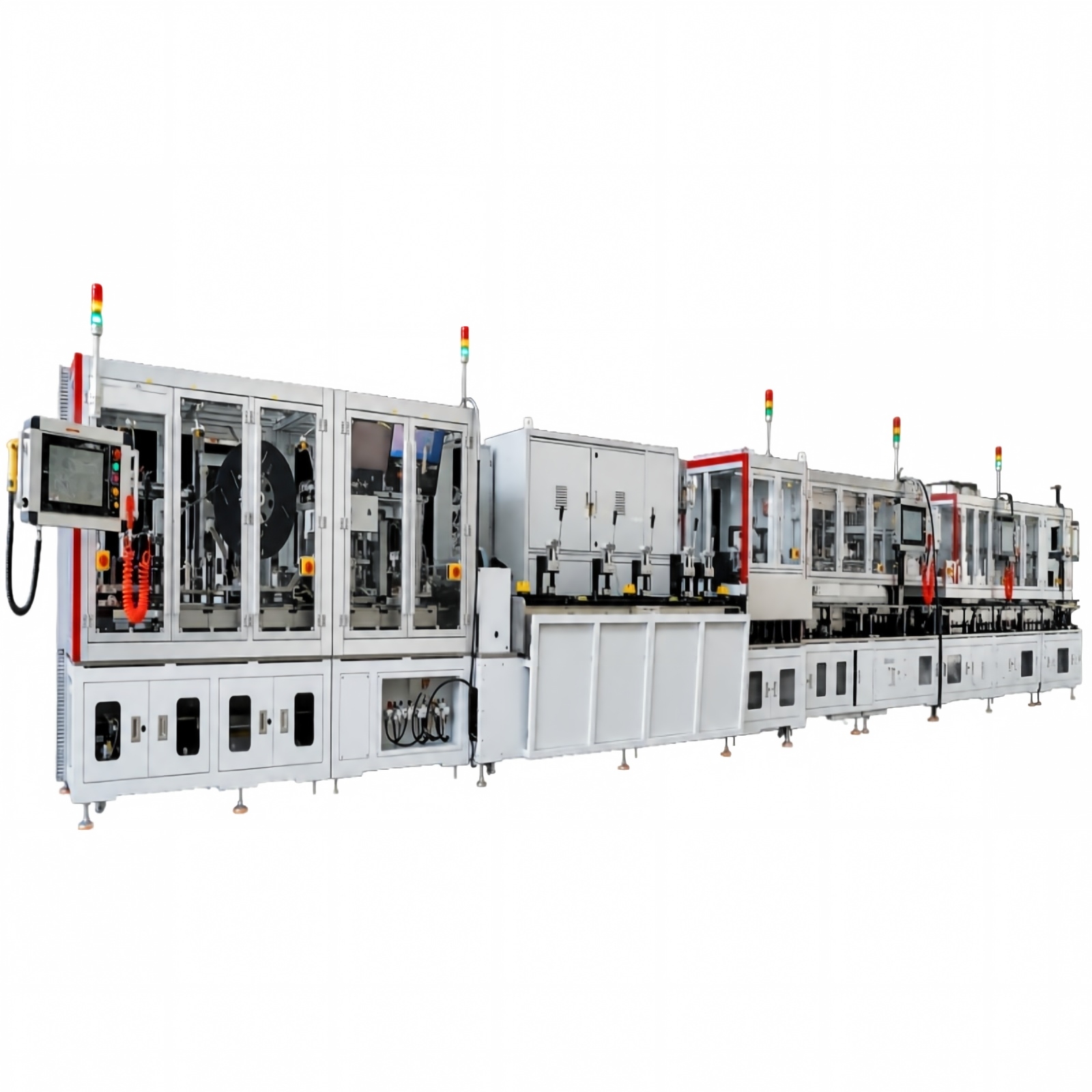
Integrating critical processes including Wafer assembly, wire preparing, resistance welding, shielding plate assembly, and high-pressure molding, this backplane connector assembly line is specifically engineered to meet high-speed interconnect assembly requirements in AI servers, data centers, and related industries.
Acting as an advanced high speed wire harness machine solution, this system fulfills the global demand for the large-scale, intelligent mass production of high-performance communication connectors.
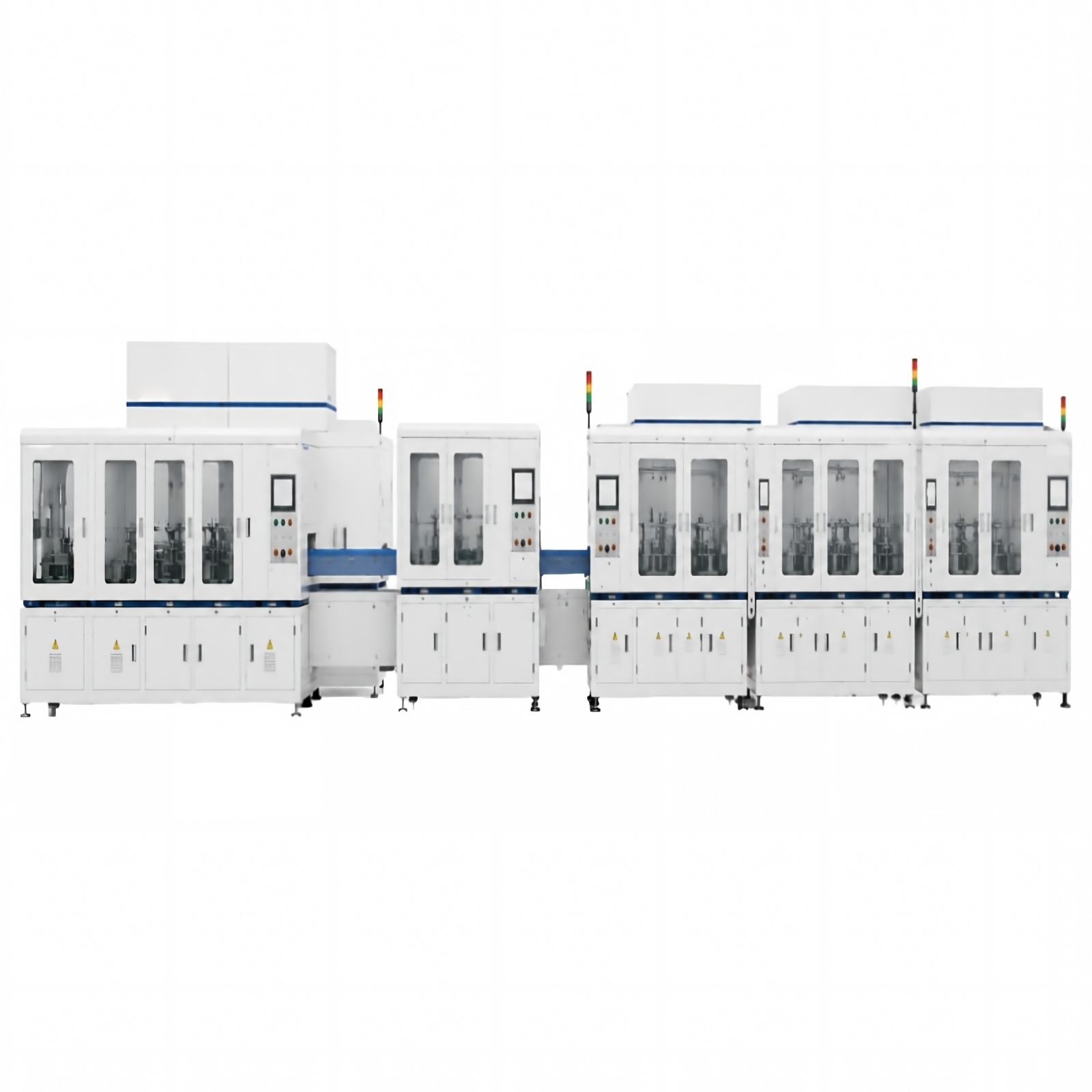
Integrating a cam-driven pin insertion system and a high-precision connector inspection system, this automatic backplane connector assembly line is specifically engineered for automatic connector assembly in the field of communications. The high-speed cam-driven pin insertion technology enables high-accuracy assembly, significantly shortening cycle times while reducing labor costs.
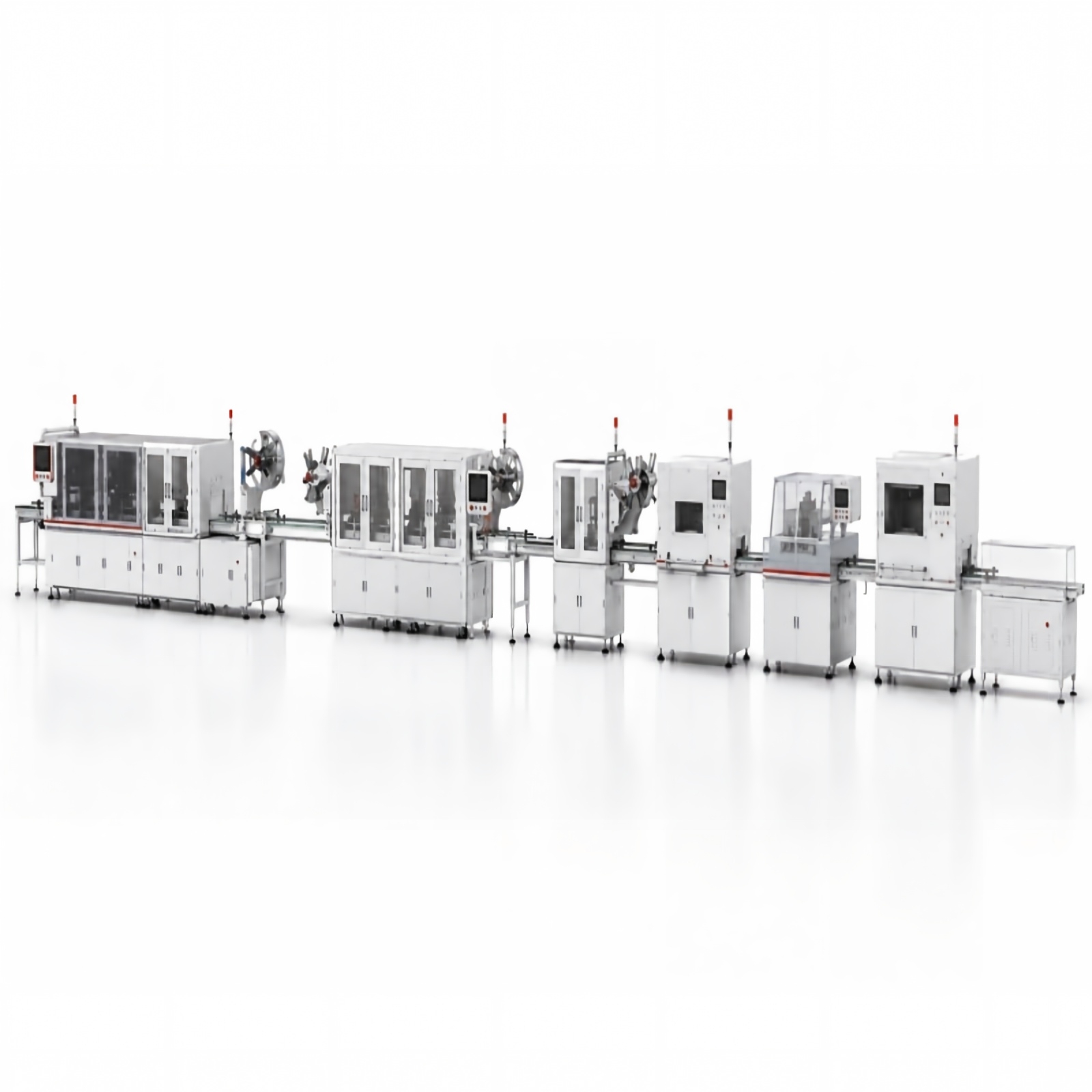
The line can realize F/N assembly, and the cutting, pin insertion, and bending for 15-pin, 6-pin, 2+3-pin, 7-pin, and 35-pin terminals. Besides, it employs automated vision inspection system to verify product dimensions, and automatically sorts out the NG (No Good) products. After assembling good products with CAP, it completes the process on an integrated connector packaging line via tape & reel. It achieves fully automatic assembly and flexible production with one-click changeover.
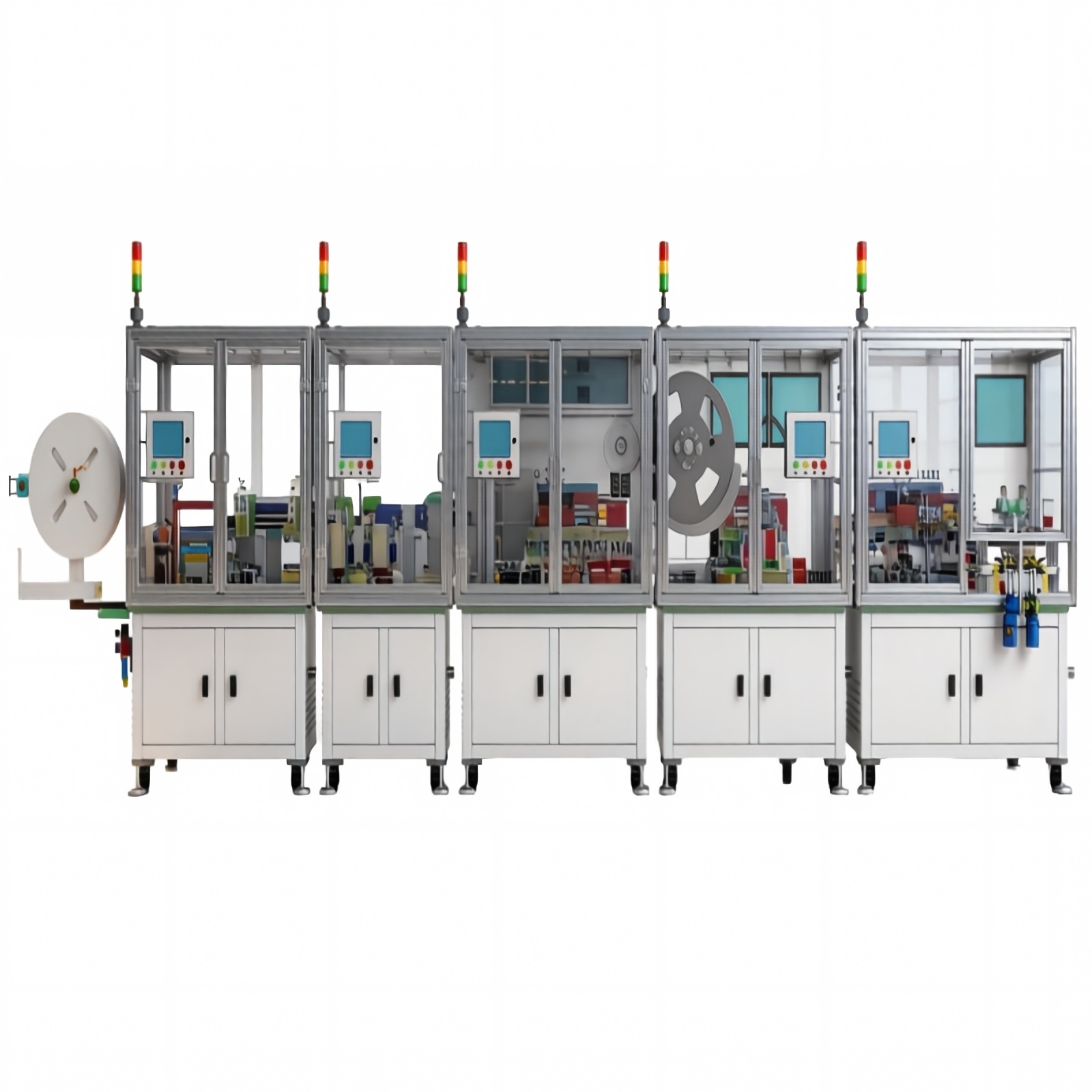
This interposer assmbly line's mold can form and cut products. Its LLCR station measures the on-resistance of the four terminals on the product. It also features an iron shell assembly station and a CCD vision inspection station using a CCD industrial camera to photograph and inspect terminal alignment.
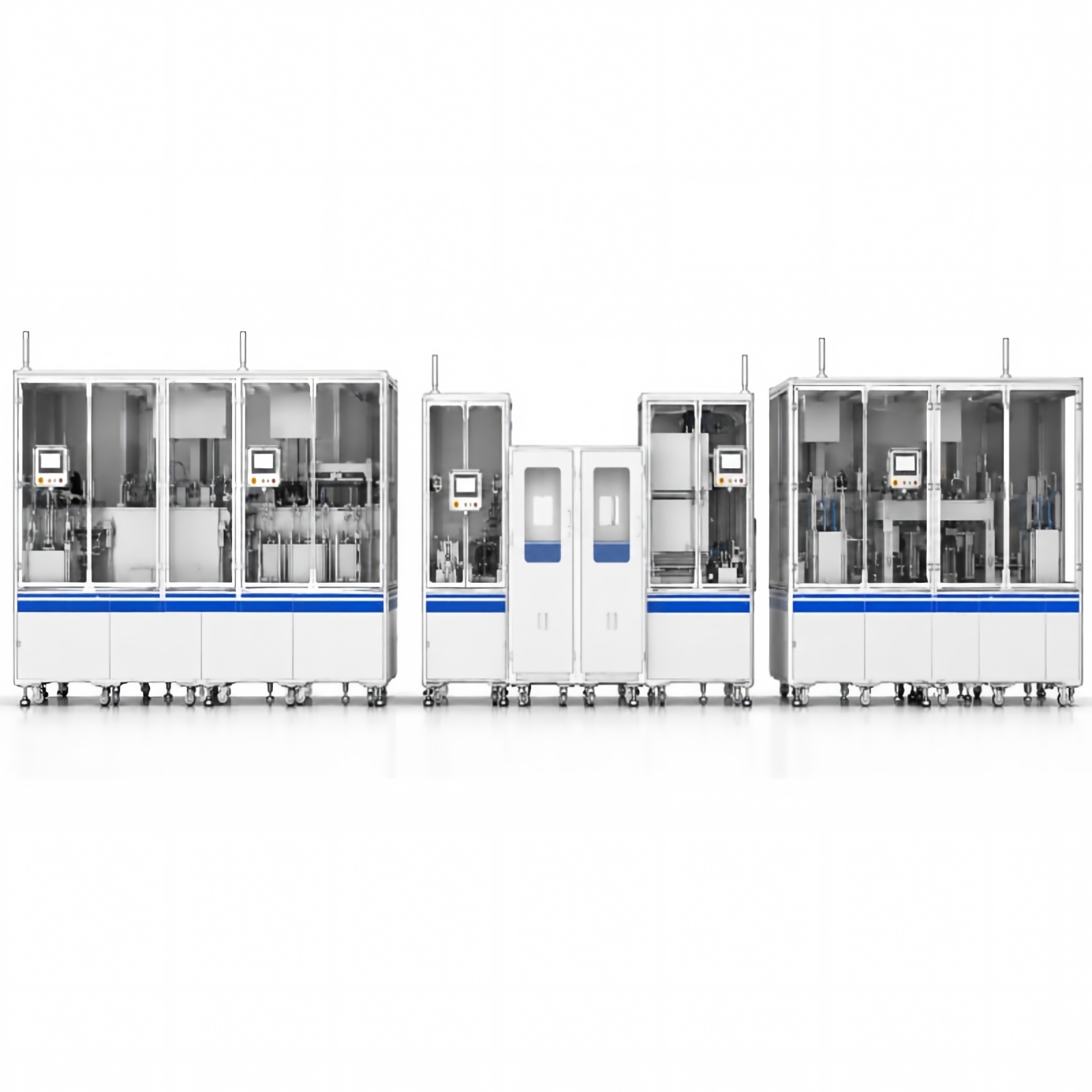
Specifically engineered for high-end consumer electronics connectors, this fully integrated connector plating line covers critical pre and post-processing stages, including rack loading, masking, glue removal, and unloading. It delivers full-process automated operation, significantly boosting productivity and product consistency while fulfilling the rigorous mass-production requirements for high-end PoP connector plating.
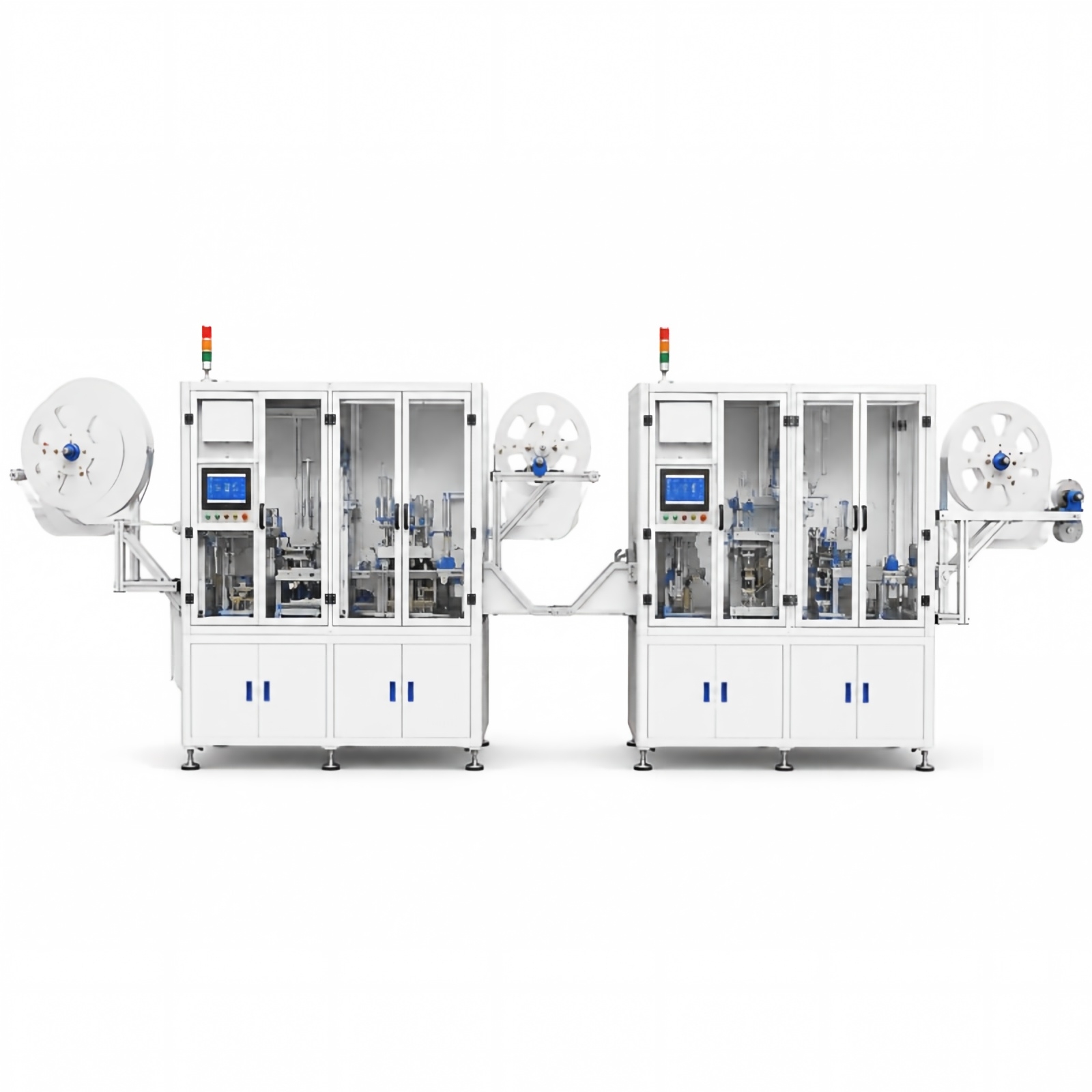
Designed to replace complex manual processes and eliminate quality fluctuations, this connector assembly line provides a fully automated solution for J271 assembly. It automates the assembly of the center iron plate with IM1 & IM2, ensuring seamless integration (workflow: automatic loading of the center iron plate → unloading of the small iron piece → automatic assembly of IM2 → automatic assembly of small iron piece → automatic assembly of IM1 → feeding the carrier tape of finished products into the EMI welding machine). As a high-performance automated welding machine, it also automates the assembly and spot welding of EMI (workflow: receiving the finished products from automatic 3-in-1 assembly machine → upper EMI cutting & positioning & assembly → upper EMI spot welding → lower EMI cutting & positioning & assembly → lower EMI spot welding → AOI → defective products discharge → reeling the carrier tape of finished products in).
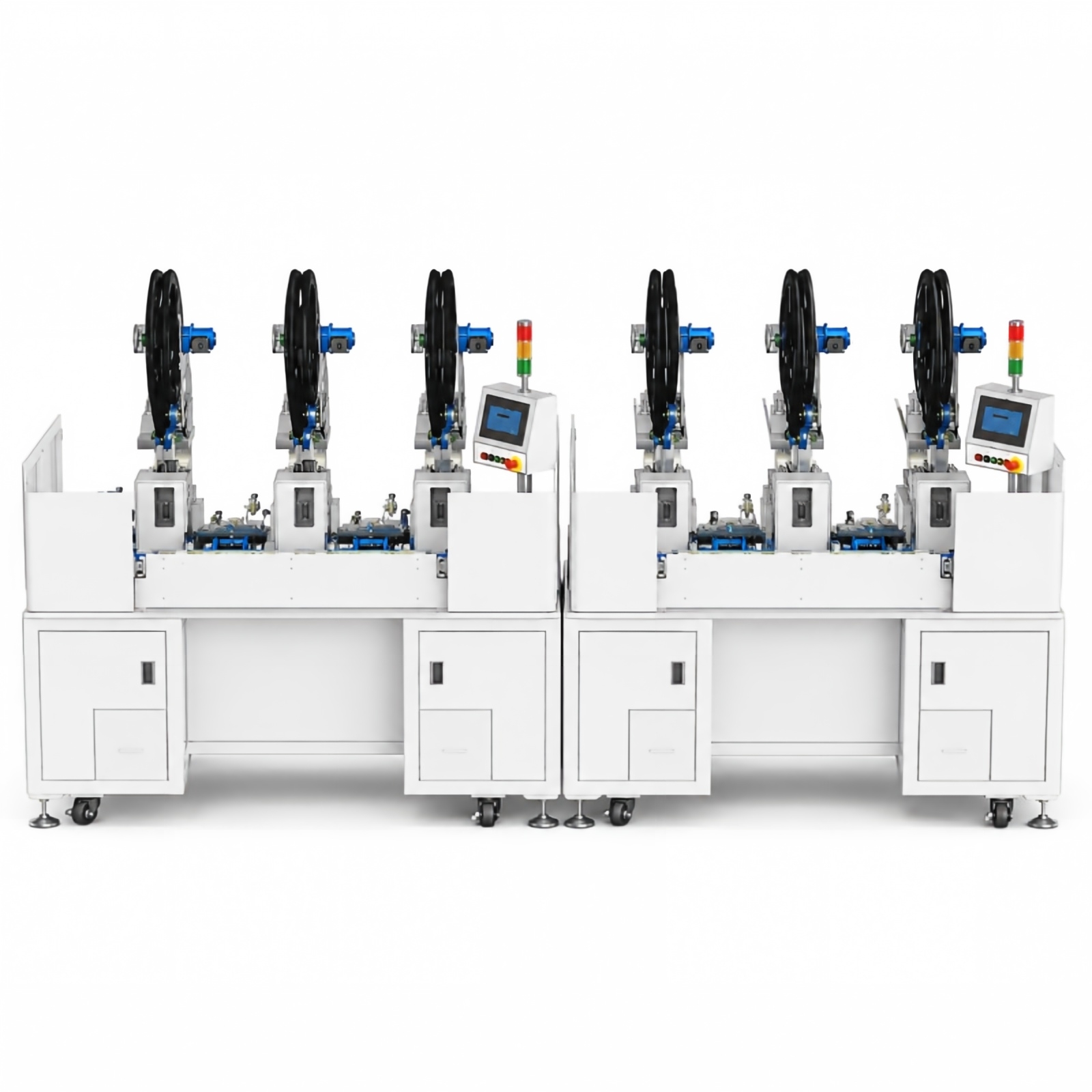
To address the inefficiencies and inconsistent quality associated with traditional manual assembly, this semi-automatic assembly equipment provides a precise, automated solution for terminal processing. As a specialized terminal insertion machine, it features advanced left-side terminal insertion as well as Detect1 terminal cutting and insertion functions. The system utilizes a pick-up module for material feeding and a pick-up & terminal swing module for retrieval of both the left‑side and Detect1 terminals. Subsequently, the terminal insertion module picks the terminals from the jaws and inserts them into the housing (HSG).

