Introduction
Global manufacturers are operating under unprecedented pressure. Consumer demands shift overnight, product lifecycles are shrinking from years to months, and the push for high-mix, low-volume (HMLV) production has intensified across every high-tech sector. Traditional dedicated assembly lines, which were once the gold standard for high-volume, single-product manufacturing, now pose significant financial and operational risks. When market requirements pivot or a product reaches its end-of-life, these rigid, single-purpose lines often become multi-million-dollar liabilities—incapable of adaptation and destined for decommissioning.
To survive and thrive in this volatile landscape, forward-thinking operations are rapidly transitioning to agile manufacturing methodologies. In this new paradigm, implementing flexible automated assembly equipment has transitioned from a mere competitive advantage to an absolute operational necessity. By allowing a single production line to assemble multiple product variants with minimal downtime, this technology protects capital investments, optimizes floor space, and keeps factories highly responsive to real-time market demands.
What Is Flexible Automated Assembly Equipment?
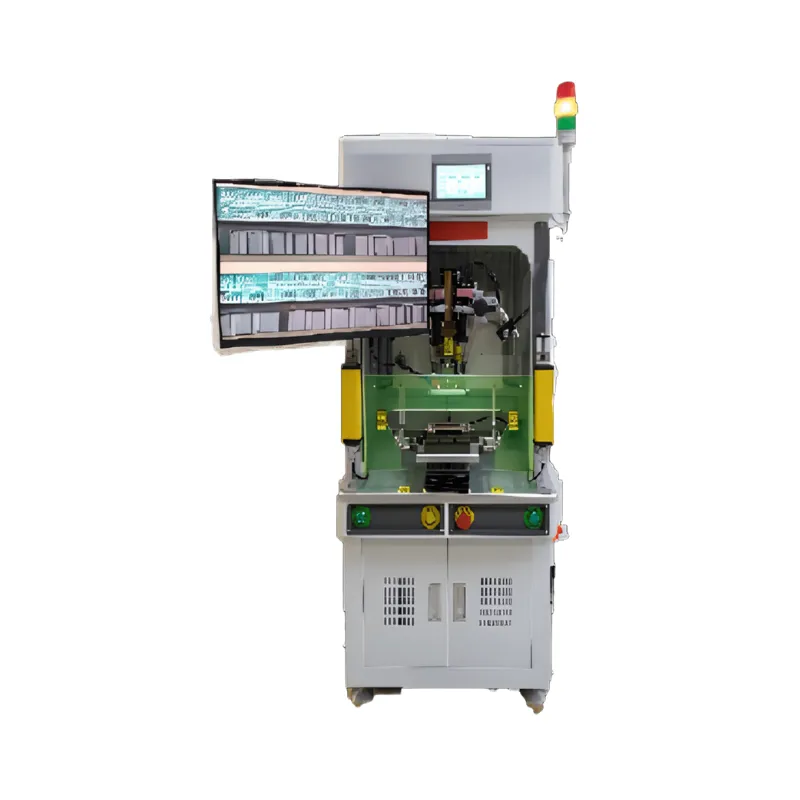
Flexible automated assembly equipment refers to a category of manufacturing machinery designed to adapt to variations in product design, size, material, and assembly processes with minimal manual intervention. Unlike traditional rigid automation, which is hard-wired to execute a single, unvarying sequence of tasks on a specific part geometry, flexible assembly systems are fundamentally modular and software-driven.
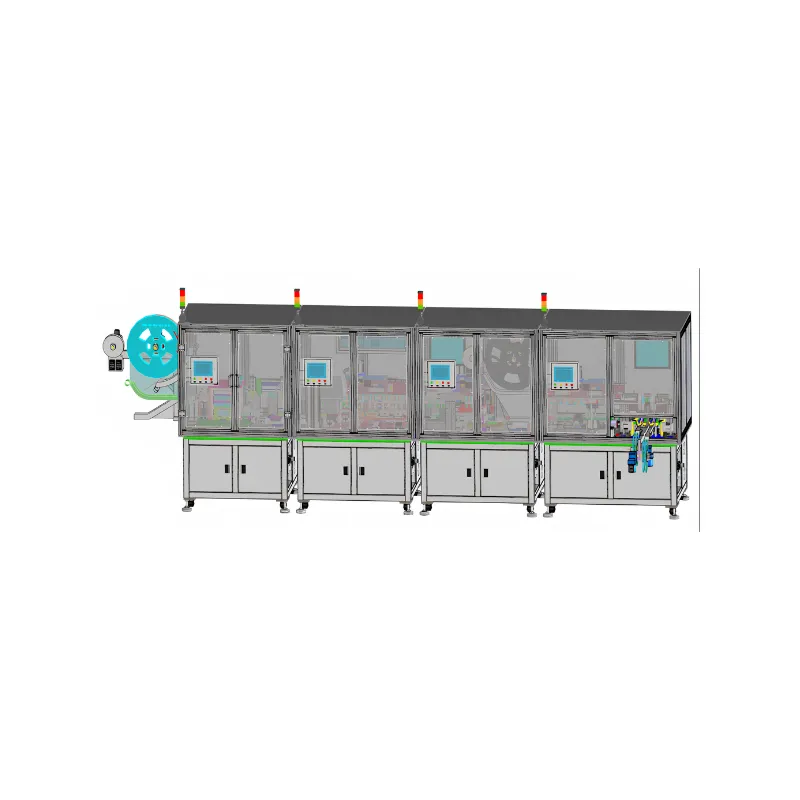
At its core, flexible assembly equipment decouples the transport system from the processing stations. By utilizing intelligent transport systems—such as magnetic levitation (maglev) tracks, programmable rotary indexing tables, or smart pallet conveyors—manufacturers gain independent control over each individual work carrier.
Furthermore, these systems feature programmable robotic manipulators, multi-functional tooling heads, and software-configurable controllers. The physical hardware is designed to be easily adjustable, while the software architecture allows for the rapid reprogramming of motion paths, force profiles, and process parameters. This combination of physical modularity and digital adaptability defines the essence of modern flexible automation.
Benefits of Flexible Automation in Modern Manufacturing
Transitioning from dedicated, single-purpose assembly lines to flexible automation platforms yields significant strategic and financial benefits:
- Dramatically Lower Total Cost of Ownership (TCO): While the initial capital expenditure (CAPEX) for flexible lines can be higher due to advanced robotics, vision systems, and programmable controls, the long-term TCO is lower. Flexible equipment can be easily repurposed for future product generations, spreading the initial investment over multiple product lifecycles rather than a single product run.
- Mitigation of Product Lifecycle Risks: If a product fails in the market or is phased out early, a dedicated line must be scrapped or undergo an expensive rebuild. A flexible line can be reconfigured for a completely different product variant or new model within days or even hours, safeguarding the capital investment.
- Optimized Floor Space: Instead of dedicating separate physical lines to different product variants, a single flexible line handles multiple models. This drastically reduces the physical footprint required on the factory floor, freeing up space for other value-added operations.
- Consistently High Overall Equipment Effectiveness (OEE): Traditional lines experience massive drops in OEE during lengthy changeovers. Flexible lines maintain high OEE by reducing changeover times to minutes, allowing manufacturers to run small batches efficiently without sacrificing productivity.
- Accelerated Time-to-Market: New Product Introduction (NPI) cycles are shortened. Prototype runs, pilot production, and mass production can occur on the same modular platform, eliminating the need to design and build entirely new assembly lines for product launches.
| Feature | Dedicated Automation | Flexible Automation |
|---|---|---|
| Product Variety | Single product model / highly restricted variants | Multiple models, varying dimensions, and complex variants |
| Changeover Time | Hours to days (requires physical teardown & retooling) | Minutes (via software recipes and quick-change fixtures) |
| Initial Investment (CAPEX) | Lower initial cost per dedicated line | Higher initial cost, but significantly lower long-term TCO |
| Lifecycle Risk | High (system becomes obsolete if the product changes) | Low (easily reconfigurable for future product generations) |
| Operational Equipment Effectiveness (OEE) | High for single runs, drops to zero during long changeovers | Consistently high (>85%) due to rapid, automated changeovers |
| Upgrade and Iteration Costs | Extremely high (often requires purchasing new machinery) | Low (requires replacing only standardized function modules) |
| Integration Capability | Rigidly fixed to a single sequence | High; supports standalone or integrated line production modes |
Multi-product Production on a Single Line
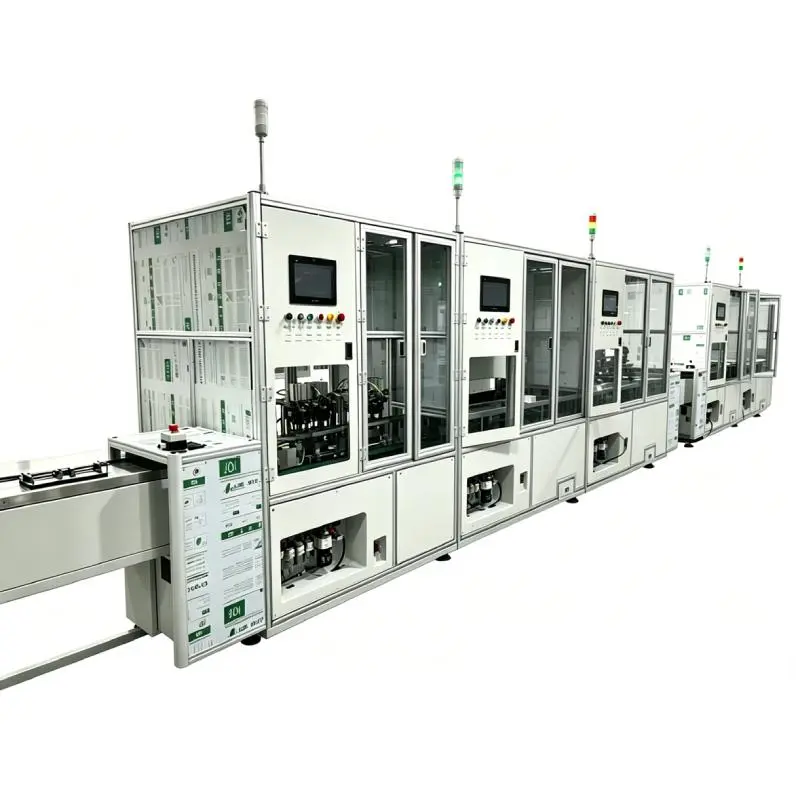
Multi-product production refers to the ability of a single physical assembly line to process different product models, sizes, or configurations sequentially or in mixed batches without requiring dedicated, separate lines. Achieving this level of flexibility requires a fundamental shift in how assembly lines route and process materials.
[Smart Conveyor / Maglev Carrier] ──► [Station 1: Auto-ID Scan] ──► [Station 2: Dynamic Recipe Load]
                                             │                                  │
                                             ▼                                  ▼
[Route to Laser Stripping] [Adjust Tooling & Torque]In a flexible assembly line, such as those built on Mijoint’s modular automation platforms, the intelligent transport system dynamically adjusts carrier speeds, acceleration, and dwell times based on the specific product model currently occupying that carrier.
If Product A requires laser stripping and hot bar soldering, while Product B requires resistance welding and dispensing, the transport system dynamically routes each product only to its required stations, bypassing unnecessary processes entirely. This dynamic routing ensures maximum throughput, optimal station utilization, and the ability to run a true "batch size of one" where different models follow each other down the line in random order.
Fast Product Changeover and Capacity Expansion
To maintain high efficiency in a multi-product environment, physical and digital systems must adapt rapidly. This is achieved through a combination of quick-change mechanical hardware and software-driven recipe management, allowing manufacturers to apply Single-Minute Exchange of Die (SMED) principles.
1. Hardware Adaptability and Quick-Change Tooling
Traditional changeovers require operators to spend hours loosening bolts, aligning plates, and manually recalibrating sensors. Flexible assembly lines replace these bottlenecks with quick-change hardware:
- Quick-Change Tooling and Fixtures: Utilizing pneumatic clamps, magnetic quick-mount systems, and quick-disconnect couplings, tooling heads (such as gripper jaws, vacuum cups, or welding electrodes) can be swapped out in seconds without hand tools.
- Motorized Servo-Driven Adjustments: Instead of manual mechanical adjustments, workstations utilize motorized servo axes to reposition guides, sensors, and tooling heads automatically. With the press of a button on the HMI, the physical dimensions of the workstation adjust in seconds to accommodate different product widths, heights, or pin configurations.
- Flexible Feeding Systems: To handle diverse component shapes and sizes, flexible lines employ vision-guided pick-and-place robots and flexible vibratory feeders. Unlike traditional vibratory bowls custom-tooled for a single part, flexible feeders use vibration patterns to spread parts flat on a surface, where an overhead industrial camera identifies their orientation for robotic picking.
2. Intelligent Recipe Management Systems (RMS)
While hardware handles the physical transition, the digital system adapts via an integrated Recipe Management System (RMS) within the machine's PLC and HMI. A "recipe" is a pre-programmed, validated set of operating parameters tailored to a specific product model. When a new product model is identified, the PLC instantly loads the corresponding recipe, eliminating manual operator input and preventing human error.
The parameters adjusted dynamically by the recipe management system include:
- Motion Control Profiles: Robotic coordinates, pick-and-place paths, and stroke lengths of actuators are updated to match the physical dimensions of the new model.
- Process Parameters: Laser power settings, scanning speeds, and pulse frequencies; dispensing volumes, pressures, and UV curing times; and soldering temperatures and dwell times.
- Force and Torque Limits: Electric screwdrivers and press-fit actuators automatically adjust their torque limits, depth profiles, and insertion forces to prevent damage to delicate components.
- Inspection Criteria: Automated Optical Inspection (AOI) systems load the specific CAD templates and tolerance thresholds for the active model, ensuring that quality inspection is tailored to the exact product variant.
3. Modular Capacity Expansion
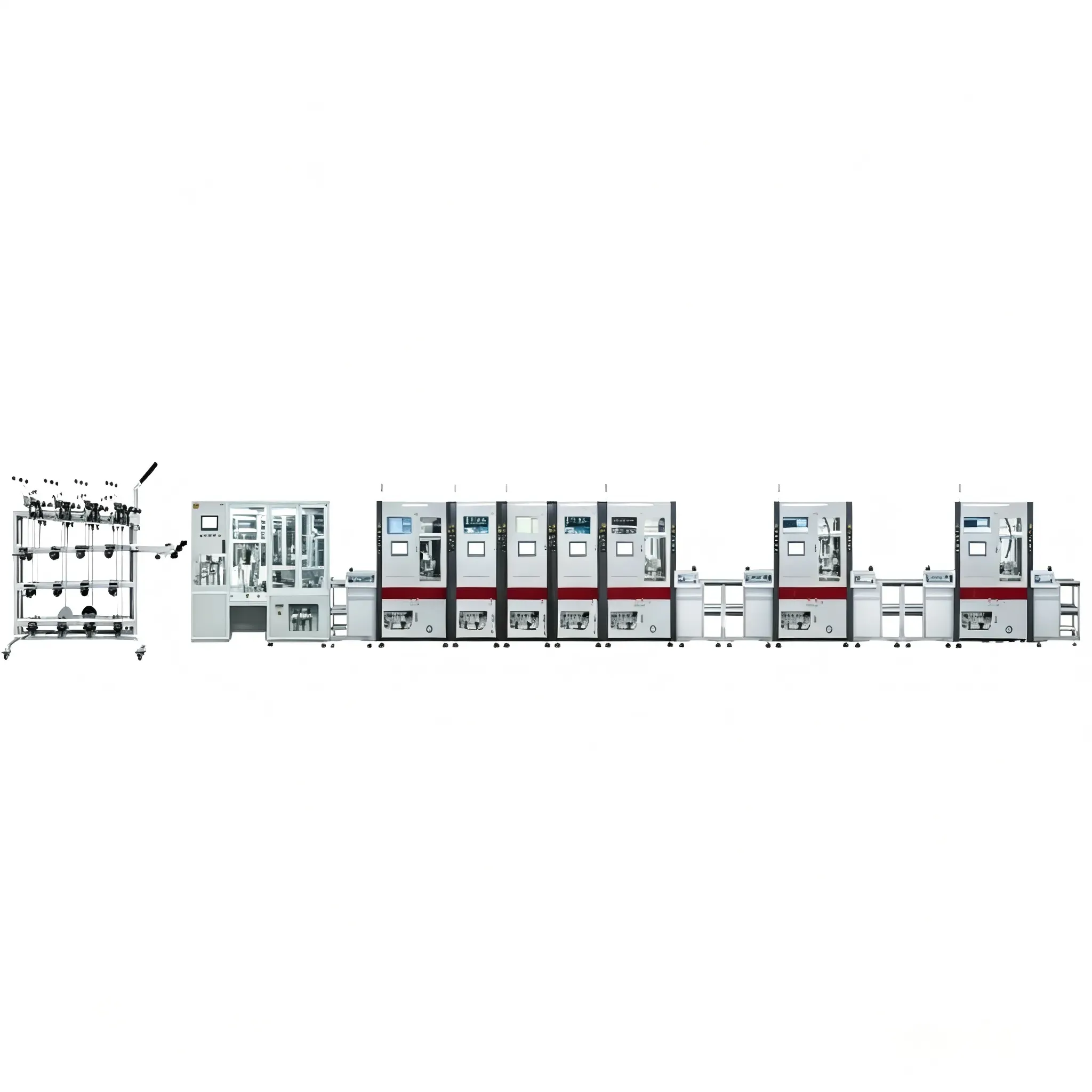
Beyond rapid daily changeovers, flexible assembly platforms are designed for long-term capacity expansion. Because the physical architecture is built on standardized, modular frames and decoupled transport networks, manufacturers can easily scale up production. If demand increases or a new process step is required, additional process modules can be "plugged" into the existing line with minimal disruption to the existing layout, protecting the initial investment and allowing for incremental capital scaling.
Intelligent Inspection and Process Control
The foundation of automated multi-product assembly is the system's ability to identify each incoming part instantly and error-free. Without reliable, real-time identification and robust process control, automated recipe switching and rapid changeovers are impossible.
1. Automatic Identification: The Sensory Gateway
Modern flexible lines integrate a multi-layered sensor network to achieve automated identification:
- RFID (Radio Frequency Identification): Each work carrier or product pallet is embedded with an RFID tag. As the carrier enters a workstation, high-frequency RFID readers scan the tag on the fly, retrieving the exact model number, serial number, and processing history of the part.
- 2D/3D Vision Systems: Industrial cameras positioned at the entrance of workstations capture high-resolution images of the incoming parts. Advanced vision algorithms analyze key geometric features, dimensions, or printed barcodes/QR codes to verify the product model and its orientation within milliseconds.
- Laser Sensors and Photoelectric Arrays: These sensors act as secondary verification tools, physically measuring part heights, widths, or key features to double-check that the physical part matches the digital data received from the RFID or barcode scanner.
2. Dual-Layer Poka-Yoke (Mistake-Proofing)
Human error during manual changeovers is a leading cause of scrap, quality escapes, and catastrophic equipment damage. To mitigate this risk, flexible lines incorporate strict physical and digital Poka-Yoke mechanisms.
[Physical Poka-Yoke: Keyed Pins] ──► [Correct Orientation Only] ──┐
                                                                 ├──► [Safe to Run]
[Digital Poka-Yoke: RFID Tag] ──► [Scanned ID matches Recipe] ─┘- Physical Poka-Yoke: Quick-change fixtures and modular tooling blocks are physically keyed (using asymmetrical dowel pins or unique mounting slots) so they can only be installed in the correct orientation. It is physically impossible for an operator to mount the fixture backward or in the wrong slot.
- Digital Poka-Yoke: The system uses sensor-based validation to confirm that the physical tooling matches the selected software recipe. Each quick-change fixture is embedded with an RFID tag or a unique physical barcode. When the operator slides the fixture into place, the workstation’s integrated reader scans the tag. If the ID of the physical fixture does not match the active recipe loaded in the PLC, the system triggers a software interlock. The machine locks its axes, sounds an alarm, and refuses to start until the correct fixture is installed.
3. Closed-Loop Process Control
Intelligent inspection goes beyond passive defect detection; it active drives process optimization. By integrating real-time measurement data (such as post-weld height, dispensing bead width, or insertion force) back into the control loop, the system can make micro-adjustments to process parameters on the fly. If a trend toward the upper tolerance limit is detected, the system automatically recalibrates the tooling parameters for the next part, ensuring zero-defect manufacturing.
Typical Industry Applications
Flexible automated assembly is highly prevalent in industries characterized by rapid technology cycles, high product variance, and strict quality standards.
[Wire Preparing (UV/CO2 Stripping)] ➔ [Conductor Pre-forming] ➔ [Laser/Hot Bar Soldering] ➔ [AOI & Testing]
                                 ▲                                                     │
└─────────── [Dynamic Recipe Feedback] ───────────────┘High-Speed Connector and Cable Manufacturing
In high-speed connector and cable manufacturing—such as NearStack series connectors and high-speed communication cable assemblies used in AI servers and data centers—modular lines handle various wire counts, shielding configurations, and connector interfaces on a single platform. The equipment seamlessly transitions from wire preparing and laser stripping to hot bar soldering and automatic dispensing.
For instance, a single line can handle wire preparing tasks with a cycle time (CT) of 25 seconds and a Unit Per Hour (UPH) of 110–115, maintaining a First Pass Yield (FPY) of >98% and an OEE of >85%, even when switching between different cable specifications.
Automotive Electronics
In automotive electronics, lines must adapt to different board layouts, enclosure sizes, and sensor configurations for Advanced Driver Assistance Systems (ADAS) and New Energy Vehicles (NEVs). By utilizing modular stations for processes like UV dispensing, resistance welding, and laser welding, manufacturers can assemble different automotive I/O modules on a single line, ensuring high-precision assembly while keeping capital expenditure low.
Consumer Electronics
Consumer electronics demand rapid scaling and extreme precision. Modular assembly lines allow manufacturers to balance mass production with pilot production (NPI). The same equipment can run in "standalone" mode for pilot runs and then be rapidly integrated into a fully automated production line for high-volume mass production, optimizing return on investment (ROI) across the entire product lifecycle.
Why Choose Mijoint's Flexible Assembly Platform
Mijoint stands as a premier strategic automation partner, delivering cutting-edge, customized solutions for high-speed cables, connectors, and 2D/3D vision inspection. Driven by over 200 high-calibre R&D engineers—42% of whom hold Senior Engineer titles, led by industry veterans with an average of 15 years of experience—we design systems that deliver Apple-grade assembly precision up to 0.01 mm and rapid cycle times of 0.8–1.0 seconds.
Operating from our 45,000 m² state-of-the-art facility, Mijoint ensures scalable and efficient delivery, capable of replicating duplicate production lines within 45 days (supporting up to 20 lines) and custom lines within 75 days (supporting 15–20 lines).
Furthermore, our global service footprint across Mexico, Vietnam, Malaysia, and Thailand ensures rapid, localized support with a strict Service Level Agreement (SLA) to maximize your OEE:
- 30-minute remote response for troubleshooting
- Field technicians dispatched within 2 hours
- On-site arrival within 24 hours
- 3–6 months of dedicated on-site technical support and field service post-delivery
With over 5,000 equipment deliveries across more than 20 countries, Mijoint is trusted by global industry leaders to power smart upgrades, reduce costs, and drive capacity growth.
Conclusion
The modern manufacturing landscape demands agility, precision, and rapid adaptation. Relying on rigid, single-purpose assembly lines is no longer viable for companies navigating high-mix, low-volume production and short product lifecycles. Embracing flexible automated assembly is the key to unlocking operational resilience, minimizing capital risk, and securing long-term profitability.
By partnering with an automation expert like Mijoint, you gain access to modular, high-precision standardized platforms that scale alongside your business. Contact Mijoint today at mijoint@mj-intelligent.com to discuss your multi-product manufacturing requirements and receive a professional, customized technical solution designed to optimize your production capabilities.