Factories are investing in automation and in manufacturing execution systems (MES) at the same time — and discovering that the two do not automatically connect. A line full of robots and automated stations can still run as a set of data islands, each machine keeping its own records in its own format, while the MES waits for information that never arrives. MES-ready automation equipment closes that gap by design: machines built from the ground up to identify units, expose their process and inspection data, and communicate with a MES through standard interfaces. This guide explains what MES-ready means, the pain points it resolves, the characteristics to look for, how the integration architecture works, and how to evaluate whether equipment is genuinely ready for your digital factory.
What Does MES-Ready Mean?
"MES-ready" describes automation equipment that can participate in a MES environment without custom engineering at every step. Concretely, a MES-ready machine can do three things: it knows which product unit it is working on at any moment (unit identification); it produces structured data about what it did and what it found (process and inspection records); and it can transfer that data automatically to a higher-level system through a standard data interface rather than through manual exports.
The distinction matters because "automated" and "MES-ready" are not the same thing. A fully automated line that logs data only to its own controller is automated but not MES-ready — its data exists, but it is locked inside the machine. MES-readiness is a property of the equipment's data architecture, not of its motion capabilities, and it has to be built in at the design stage. As a reference point, Mijoint's wire-preparing automated lines provide a standard data interface that can connect to a MES or to Mijoint's self-developed web platform, and the fully automatic CDFP high-speed cable assembly line is designed with full MES integration as part of the line architecture — examples of equipment where the data path to the MES is a designed-in feature rather than a retrofit project.
Pain Points: Data Silos, Manual Reporting Errors, and No Real-Time Production Visibility
When equipment is not MES-ready, three familiar problems follow.
Data Silos
Each machine accumulates its own records — cycle counts, parameters, inspection results — in its own format, on its own controller. Nobody sees the whole picture, because no single system holds it. Cross-line questions become manual research projects: how many units from today's shifts passed first-article inspection across all stations? Which machine drift is causing a particular defect? Answering requires someone to walk from machine to machine and collect files. Data silos are the reason "we have the data somewhere" and "we know the answer" are, in practice, different statements.
Manual Reporting Errors
In the absence of automatic data flow, people fill the gap — writing down counts, transcribing inspection results, re-keying process data into spreadsheets and reports. Manual transcription introduces errors at exactly the stage where precision matters most, and it consumes skilled labor on work a machine could do instantly. It also lags: a report compiled at shift end describes the shift that is already over, not the one you are trying to manage.
No Real-Time Production Visibility
Without equipment data flowing to the MES, production status is reconstructed rather than known: how the line is actually performing right now, which station is limiting output, whether quality is drifting — these become visible only after the fact, through end-of-day reports or quality escapes. Problems are discovered late, when they are expensive, instead of as they emerge, when they are cheap to correct. Real-time visibility is not a luxury feature of digital factories; it is the difference between managing production and reviewing it.
Key Characteristics of MES-Ready Equipment
When you examine equipment for MES readiness, the following characteristics separate genuinely ready machines from machines that merely claim connectivity:
- Unit identification at the machine. The equipment reads or assigns a unique identifier for each unit — barcode, data matrix code, or RFID — so its records attach to individual products rather than to batches or time windows. On some Mijoint equipment, this is implemented with a laser-marked two-dimensional code applied automatically during the process.
- Structured process and inspection data. The machine outputs defined data fields — process parameters, pass/fail results, measurements — not just logs. For example, CCD vision inspection results and four-wire Kelvin contact resistance measurements, each linked to the unit identifier.
- A standard data interface. The decisive feature. The equipment offers a documented, standard interface for data exchange rather than requiring proprietary adapters. Mijoint's wire-preparing lines, for instance, expose a standard data interface for MES or web-platform connection as a baseline configuration.
- Automatic data upload. Records flow to the higher-level system continuously and without operator action — the data path should never depend on someone remembering to export a file.
- Remote monitoring support. The machine supports remote status monitoring, so line condition can be checked without standing in front of the equipment. Mijoint's MCIO and CDFP wire-preparing lines include video monitoring and remote monitoring in their standard configuration.
- Recipe and event context. The data the machine reports carries context — which recipe was active, which alarms occurred — so MES records reflect production reality, not just raw numbers.
MES Integration Architecture: From Equipment to ERP
MES-ready equipment fits into a three-layer architecture. At the bottom, the equipment layer: PLCs, vision systems, test instruments, and sensors doing the actual work and generating data per cycle. In the middle, the MES layer: receiving unit-level records from equipment through standard data interfaces, storing them, and orchestrating production — work orders, recipes, traceability, quality records. At the top, the enterprise layer (ERP): consuming aggregates from the MES for planning, inventory, and order management.
The equipment–MES boundary is where most integration failures happen, because it is where machine data must become structured business information. Equipment that was not designed for this boundary forces custom middleware — point-to-point adapters that are expensive to build and fragile to maintain. Equipment that is MES-ready collapses this problem: the interface already exists, documented and tested, so integration becomes configuration rather than development. The same logic applies below the MES: Mijoint's approach of offering a standard data interface that connects either to a customer's MES or to Mijoint's self-developed web platform gives factories a working data path even before a full MES rollout — an intermediate step that delivers traceability and visibility while the digital architecture matures.
Integration sequencing matters as much as architecture. Factories rarely connect everything at once; the practical path is to start with the lines where traceability or visibility pain is most acute, prove the data flow there, and extend outward. Equipment with a standard interface makes this incremental approach realistic — each new line can follow a defined integration process, with the required configuration and testing determined by the customer’s MES
How MES-Ready Equipment Works in Practice
In daily operation, a MES-ready line behaves like this: where supported, the MES may dispatch work orders or recipes to the equipment; at loading, each unit receives its identifier — for example, a laser-marked code applied automatically by the machine; as the unit moves through stations, each machine appends its process record and inspection results against that identifier, uploading automatically through the standard interface; operators and supervisors see live status through monitoring dashboards rather than walking the line; and at the end, every finished unit has a complete, machine-generated quality record stored in the MES — no transcription, no end-of-shift data entry.
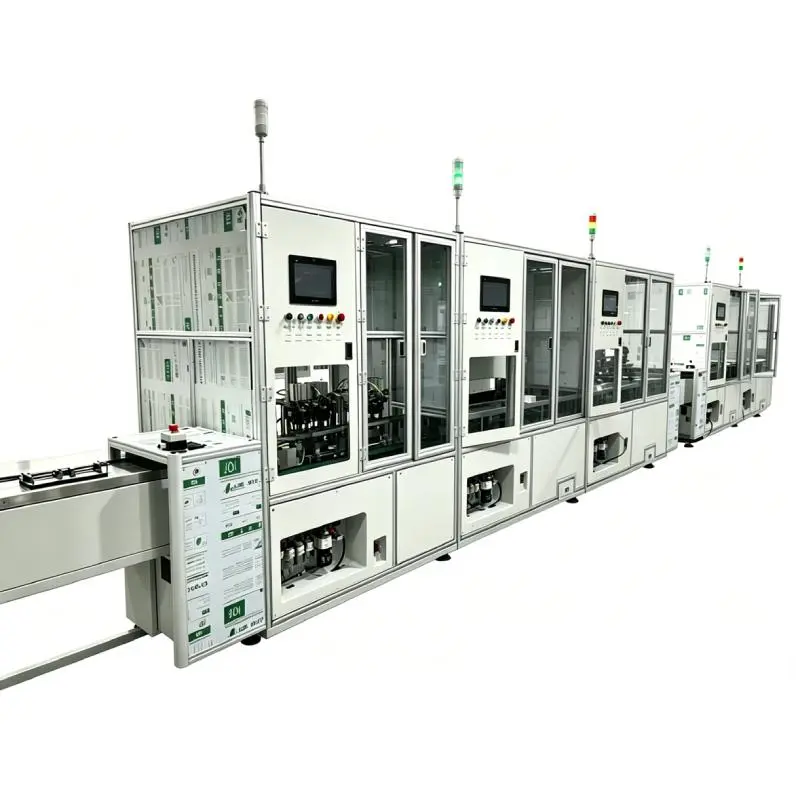
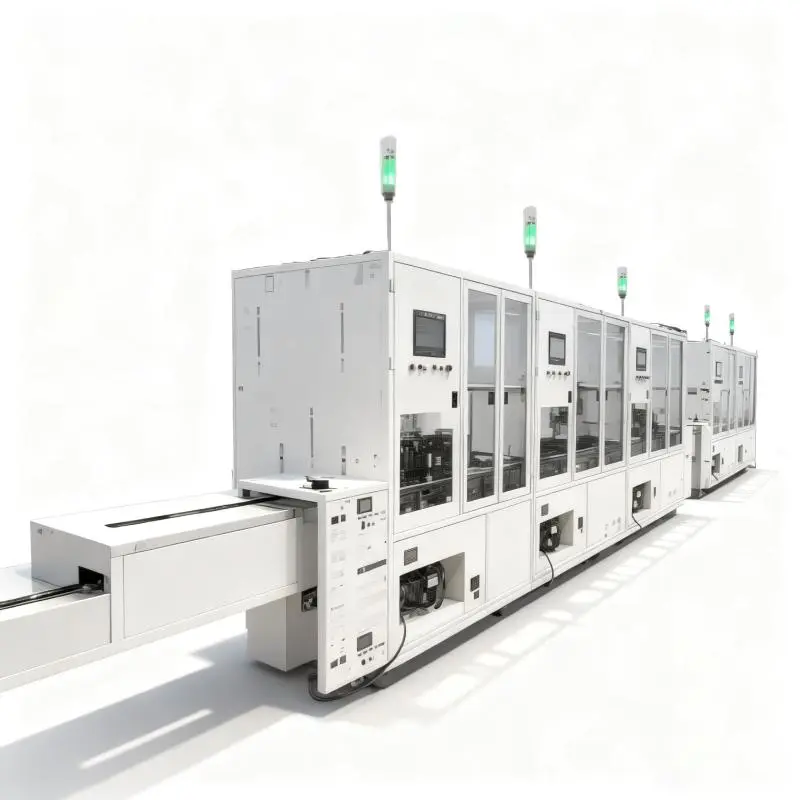
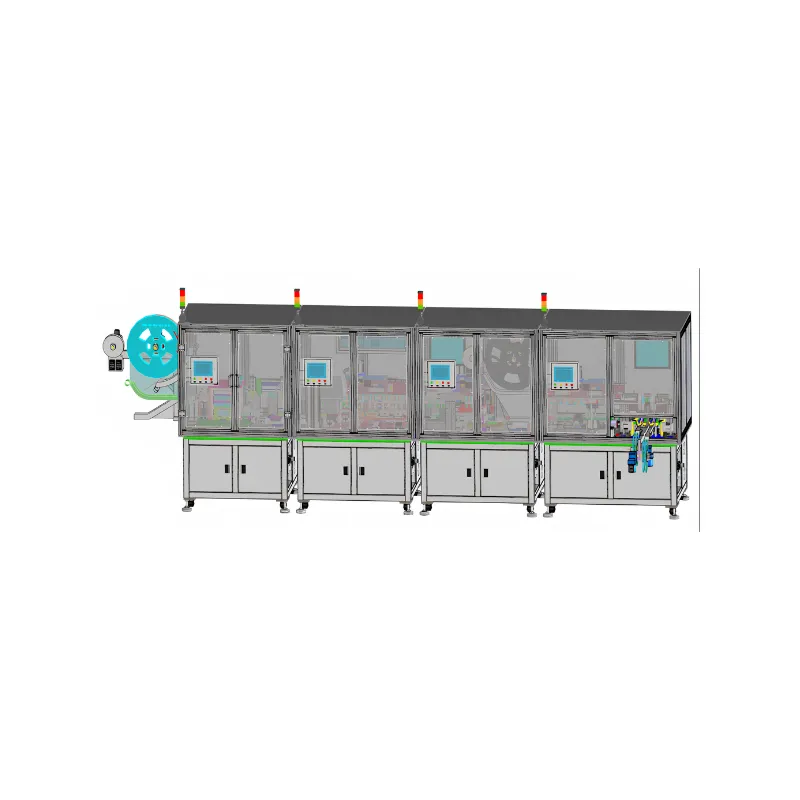
This is not a hypothetical architecture. On Mijoint's B901 flexible assembly line, laser-marked two-dimensional codes identify each unit, CCD vision inspection of terminal alignment and LLCR four-wire Kelvin contact resistance measurement generate the inspection data, and all inspection data is stored in a MES for full-process traceability. The MCIO and CDFP wire-preparing automated lines record automatic production data traceability with video monitoring and remote monitoring, connected through a standard data interface. The pattern is consistent: the equipment generates and uploads the record; people use it instead of creating it.
How MES Integration Solves Production Management Problems
Connecting MES-ready equipment to a MES converts the three pain points above into manageable, even routine, operations. Data silos dissolve because every machine reports into the same system in the same structure — the cross-line question becomes a query instead of a research project. Manual reporting disappears because the records the reports used to summarize now create themselves at the source, eliminating transcription errors and freeing skilled people from clerical work. And real-time visibility stops depending on who happens to be watching: production status, station performance, and quality trends update continuously as the machines report.
There is a compounding effect as well. Once unit-level data accumulates in the MES, the factory gains analytical raw material it never had: defect rates by station, parameter drift over time, yield differences between shifts and recipes. Traceability, in turn, becomes automatic — when a quality event occurs, the affected units and their complete records are identified in minutes, which shortens containment and strengthens the factory's position in customer audits.
How to Evaluate Equipment MES Readiness
When comparing equipment for a digital factory, ask these questions directly, and treat vague answers as findings:
- Does the machine identify units at the station level? If records attach to batches or time windows rather than units, traceability will be approximate no matter what the MES promises.
- What exactly is the data interface? Ask for the specification: what protocol, what data fields, what documentation. "We can connect to your MES" is a claim; an interface specification is evidence.
- Is data upload automatic and continuous? Confirm that records flow without operator action and without periodic manual exports.
- Which inspection and process data are included? The more of the machine's decision data — vision results, measurements, parameters — is exposed, the more complete the MES record will be.
- Does remote monitoring come as standard? Video monitoring and remote monitoring indicate the machine was designed for supervised, networked operation rather than standalone use.
- Can the equipment run before the MES is complete? An intermediate data path — such as a supplier's web platform — lets you capture traceability value immediately instead of waiting for the full digital stack.
Why Choose Mijoint's MES-Ready Solutions
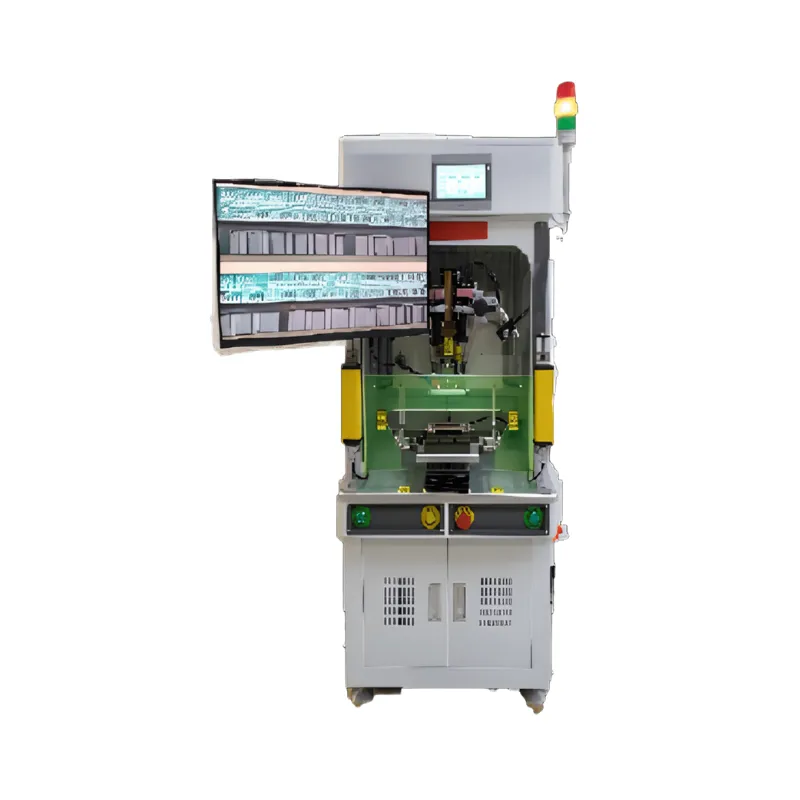
Mijoint's automated assembly equipment is designed with the MES boundary in mind. The MCIO wire preparing automated line and CDFP wire preparing automated line provide automatic production data traceability, video monitoring and remote monitoring, and a standard data interface that connects to a MES or to Mijoint's self-developed web platform. The B901 flexible assembly line stores all CCD vision inspection and LLCR four-wire Kelvin measurement data in a MES against laser-marked unit codes for full-process traceability. For full-line coverage, the high-power hot bar soldering machine regulates temperature and pressure in a closed loop with sensor feedback — process control whose parameters belong in your MES record.
If your digital factory plans call for equipment whose data architecture matches your MES environment, contact our team to discuss a tailored configuration.
Conclusion
MES-ready automation equipment is what turns an automated line into a data source your digital factory can actually use. The essential requirements are simple to state and demanding to build: unit identification at each machine, structured process and inspection data, automatic upload through a standard data interface, and monitoring support for remote, real-time oversight. Equipment that meets them eliminates data silos, removes manual reporting and its errors, and gives production management the real-time visibility it has been reconstructing from end-of-shift reports.
The practical advice is to make MES readiness an equipment-selection criterion, not a post-purchase integration project. If you are planning automated assembly equipment for a MES-connected factory, contact Mijoint's engineering team to request a customized equipment proposal, or visit the About Mijoint page to learn more about the company's automation and data integration capabilities.