When a quality problem surfaces — a field return, a customer complaint, an audit finding — the first question every manufacturer faces is the same: which units are affected, and what exactly happened to them during production? If that question takes days to answer, or cannot be answered at all, the cost of the original defect multiplies. Production traceability for automated assembly lines is the discipline of recording, unit by unit, every piece of information needed to answer it in minutes. This guide explains what traceability means in practice, the pain points it solves, how a traceability data model is structured, which enabling technologies are involved, and how to build end-to-end quality tracking on an automated assembly line.
What Is Production Traceability?
Production traceability is the ability to reconstruct the complete history of any individual product: which components and materials went into it, which machines and stations processed it, which process parameters were applied, and which inspection results it recorded — all linked to a unique identity for that unit.
On an automated assembly line, traceability is not a separate activity bolted onto production. The equipment already generates most of the required data as a by-product of running: PLC cycle data, process parameters, vision inspection results, test measurements. Traceability is the practice of capturing that data per unit, associating it with a unit identifier, and storing it in a retrievable form — typically a MES or an equivalent data platform. Done well, traceability turns the production line from a machine that makes products into a system that also documents them, automatically and without adding labor.
Pain Points: No Root Cause Traceability, Recall Scope Too Wide, and Customer Audit Failures
The case for building traceability becomes clearest when you look at the three failures that manufacturers without it experience repeatedly.
No Root Cause Traceability
When a defective unit is found, the first task is to understand what went wrong: which station, which shift, which parameters, which batch of incoming material. Without per-unit records, this investigation depends on the memory of operators and on batch-level guesses. Suspected causes cannot be confirmed or eliminated, so corrective actions aim at broad targets, and the same failure mode recurs. The absence of root cause traceability is what turns an isolated defect into a repeating one.
Recall Scope Too Wide
When a problem cannot be isolated to specific units, the only safe response is to quarantine everything that might be affected. If you know only that the suspect defect occurred "sometime during a week of production," every unit from that week is suspect — regardless of whether it was built on the same machine, with the same material lot, or on the same shift. Wide containment means writing off good product, disrupting delivery schedules, and absorbing costs for defects that may not even exist in the retained units. Precise traceability narrows containment to exactly the units that share the suspect characteristic.
Customer Audit Failures
In electronics and interconnect supply chains, customers increasingly audit their suppliers' quality systems, and traceability is one of the first things they examine. A supplier who cannot demonstrate unit-level records — identification, process data, inspection results, and their linkage — presents a systemic risk no matter how good current quality metrics look. Failed audits delay qualification, trigger extraordinary oversight, and in competitive bids can outweigh a favorable price.
The Traceability Data Model: Components, Process, and Inspection Data
Practical traceability is built on three data categories, all keyed to a unique unit identifier:
- Component data. What went into the unit: material lot numbers, component batches, supplier identifiers, and dates of receipt. This is the dimension that makes containment precise — if a suspect raw-material lot is identified, traceability tells you exactly which finished units used it.
- Process data. What was done to the unit: which stations it passed, in what sequence, with which process parameters — for example, laser stripping settings, soldering temperature and pressure profiles, and forming dimensions recorded at each step.
- Inspection data. What was verified about the unit: vision inspection results, electrical test values such as contact resistance measurements, and final inspection outcomes, each linked to the station and time at which it was taken.
The unit identifier is the thread that ties all three together. It can be a barcode, a data matrix code, an RFID tag, or a serial number assigned at line entry and carried — physically or logically — through every station. The design decision is not trivial: the identifier must survive every process the product passes through, or the record chain breaks exactly where it is needed most.
How Traceability Works on Automated Assembly Lines
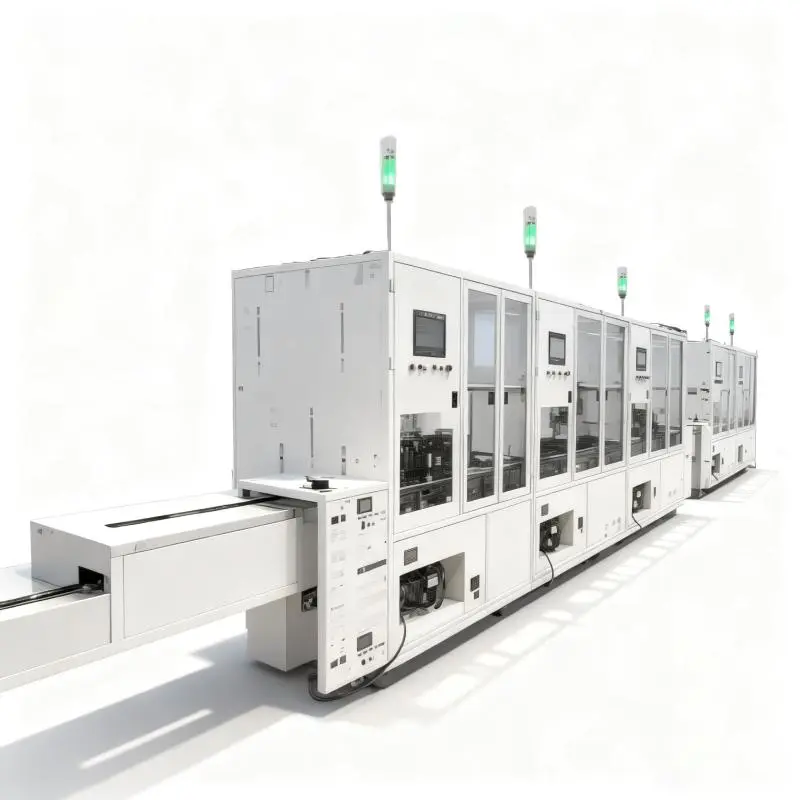
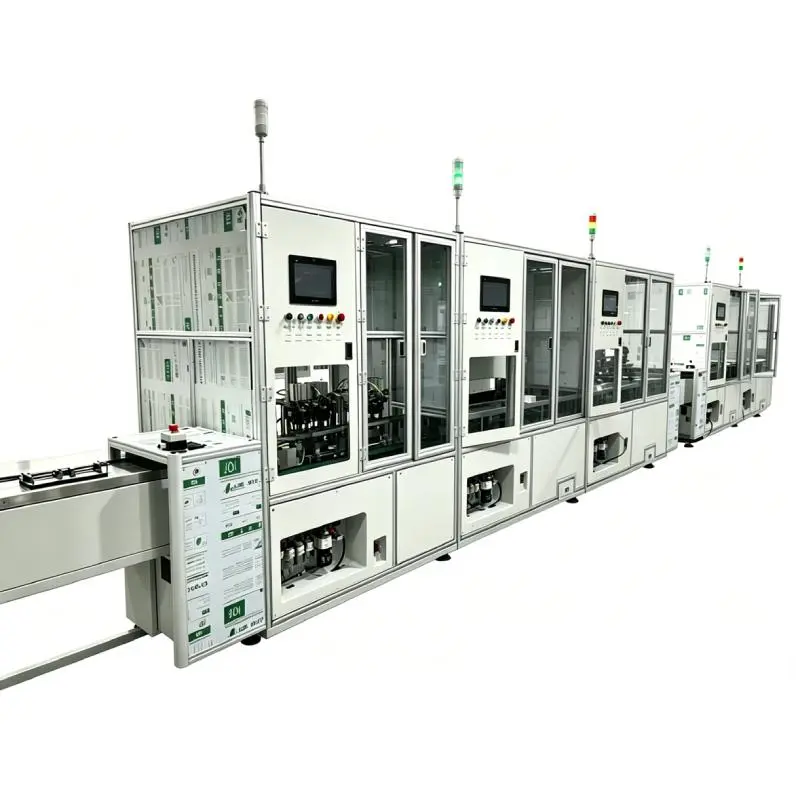
On a well-designed automated line, the traceability flow looks like this: the unit receives its identifier at loading; as it moves through each station, the station's PLC or control system reads the identifier, executes the process, and writes the process record back against that identifier; inspection stations — vision systems and test equipment — append their results in the same way; and the accumulating record is transferred to a MES or data platform through a standard data interface.
Automation is what makes this economically realistic. A manual line can collect some of this data by hand, but collection competes with production for operator time, and hand-entered records are slow, incomplete, and error-prone. On an automated line, much of the data can be captured as part of the production process: the machine already controls parameters and evaluates results, so recording them can be integrated with minimal impact on cycle time.This is why traceability maturity tends to track automation maturity, and why equipment selection should treat data capability as a first-class requirement rather than an afterthought.
Two design details determine whether this flow holds up in practice. First, the identifier must be applied as early as possible on the line and must survive every subsequent process — a code that becomes unreadable after soldering or handling breaks the chain at precisely the point where records matter most. Second, each station should be treated as a data producer with a defined contract: it reads the identifier, writes its record, and confirms the write. When a station's record fails to upload, the line should flag the gap immediately, because a hole in the record chain discovered during a quality event is a hole discovered too late.
Enabling Technologies: Barcodes, RFID, PLC Data, and MES
Several technologies cooperate to make unit-level traceability work:
- Laser marking and barcodes / data matrix codes. A permanent, machine-readable identifier applied directly to the product or its carrier. Laser marking is particularly robust because it survives subsequent handling, and on some assembly equipment it is applied automatically as part of the process — for example, a laser-marked two-dimensional code applied during assembly so every unit carries its identity through the remaining stations.
- RFID. Used where the identifier needs to be read without line-of-sight or must travel on a pallet or fixture rather than on the product itself.
- PLC and equipment data. The process parameters already controlled by each station's controller, captured per cycle and per unit.
- Vision inspection results. Automated inspection outcomes — alignment checks, presence/absence, appearance judgments — attached to the unit record rather than kept as isolated images.
- Electrical test data. Measured values such as four-wire Kelvin contact resistance readings, stored per unit with their test conditions.
- MES integration. The platform that receives, stores, and indexes all of the above so records can be queried by unit, by batch, by time window, or by parameter.
The connecting tissue among all of these is the standard data interface. Equipment that speaks a standard interface can hand its records to a MES directly; equipment that cannot becomes an island, and every island in the line is a gap in the traceability chain.
Building End-to-End Quality Tracking to Solve Traceability Gaps
End-to-end tracking means the record chain is unbroken from first station to last — every unit's component, process, and inspection data is captured and linked. The practical way to build it is to audit your current line station by station and ask three questions at each one: Does this station know which unit it is working on? Does it record what it did and what it found? And does that record reach the central platform automatically?
Where a gap appears, it usually takes one of three forms: a station that processes units without reading any identifier; a station whose results stay local (a test instrument logging only to its own memory); or a data handoff that happens manually — an operator exporting files or re-keying results. Each of these is a place where, during a quality event, the trail will go cold.
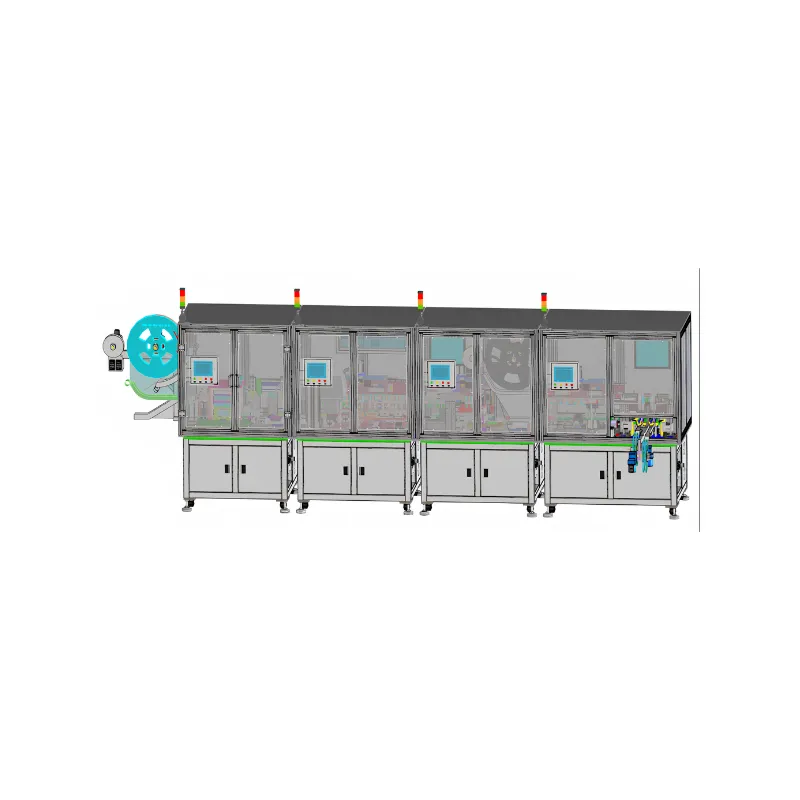
Modern automated assembly equipment closes these gaps by design. As a concrete example, Mijoint's B901 flexible assembly line applies a laser-marked two-dimensional code to each unit during the process, then chains together CCD vision inspection of terminal alignment and LLCR contact resistance measurement using the four-wire Kelvin method — and stores all of the inspection data in a MES to achieve full-process traceability. Each unit’s inspection results are linked to its identifier, creating a retrievable, machine-generated inspection record. For broader production traceability, material and process records must also be linked to that identifier where required.
Compliance and Industry Standards
Traceability requirements are not self-imposed — they flow from customer and industry expectations. Automotive quality systems expect suppliers to demonstrate the ability to isolate suspect product by production run and material lot. Electronics and interconnect customers increasingly specify record-retention and unit-identification requirements in their supplier quality agreements. Data-center and AI-infrastructure customers, for their part, typically require documented inspection and test records for every shipment as part of incoming quality control.
The practical implication for line planning is that traceability scope should be defined by your customers' requirements and the standards that govern your market, then implemented in the equipment data model. Retrofitting traceability after an audit finding is far more expensive than specifying data capability when the line is purchased — which is why the evaluation questions in the next section belong in equipment selection, not in corrective-action reports.
Why Choose Mijoint's Traceability-Ready Equipment
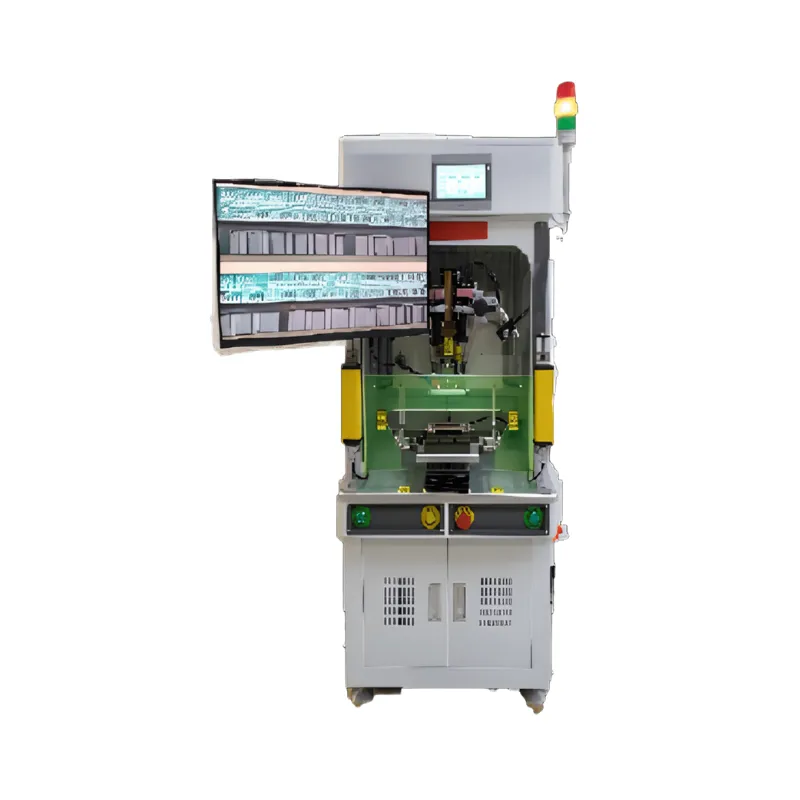
Mijoint designs its automated assembly equipment with traceability as a baseline capability. The B901 flexible assembly line combines stamping, forming and cutting, LLCR four-wire Kelvin contact resistance measurement, shell assembly, and CCD vision inspection of terminal alignment — and stores all inspection data in a MES via laser-marked two-dimensional codes for full-process traceability.
For high-speed cable production, the MCIO wire preparing automated line and CDFP wire preparing automated line both provide automatic production data traceability with video monitoring, and connect to a MES or Mijoint's self-developed web platform through a standard data interface. The high-power hot bar soldering machine controls soldering temperature and pressure in a closed loop with sensor feedback, so the process parameters behind each joint are actively regulated — the kind of process data a traceability system is meant to capture.
If your products or customer requirements call for a traceability scope beyond these standard configurations, contact our team to discuss a tailored automated line with the data architecture your quality system needs.
Conclusion
Production traceability for automated assembly lines is built from three elements: a unique unit identity, per-unit capture of component, process, and inspection data, and automatic transfer of those records into a MES or data platform. Its value shows up at exactly the moments that matter most — when you need a root cause, when you need to scope a containment precisely instead of quarantining a week of production, and when a customer auditor asks to see your records.
The most dependable way to achieve it is to buy it into the equipment: machines that identify each unit, record their own process and inspection data, and hand those records to your MES through a standard interface. If you are planning a new automated assembly line and want traceability designed in from the start, contact Mijoint's engineering team to request a customized equipment proposal, or visit the About Mijoint page to learn more about the company's automated assembly capabilities.