Automated assembly equipment already measures, controls, and judges almost everything it does — cycle by cycle, unit by unit. The question that separates high-performing factories from the rest is whether that data is collected and used, or whether it evaporates inside each machine's controller. Machine data collection for automation equipment is the practice of capturing process parameters, production counts, inspection results, and equipment status automatically, moving them to a central system, and turning them into decisions. Done well, it converts unplanned downtime and blind management decisions into monitored, predictable, and continuously improving operations. This guide explains how it works, what data to collect, which technologies carry it, and how to implement it on an automated line.
What Is Machine Data Collection?
Machine data collection is the automatic capture of information generated by production equipment — process values, event records, quality results, and status signals — and its transfer to a system where it can be stored, viewed, and analyzed. The word "automatic" carries most of the weight: the data moves from machine to system without operators writing anything down, exporting files by hand, or re-keying numbers.
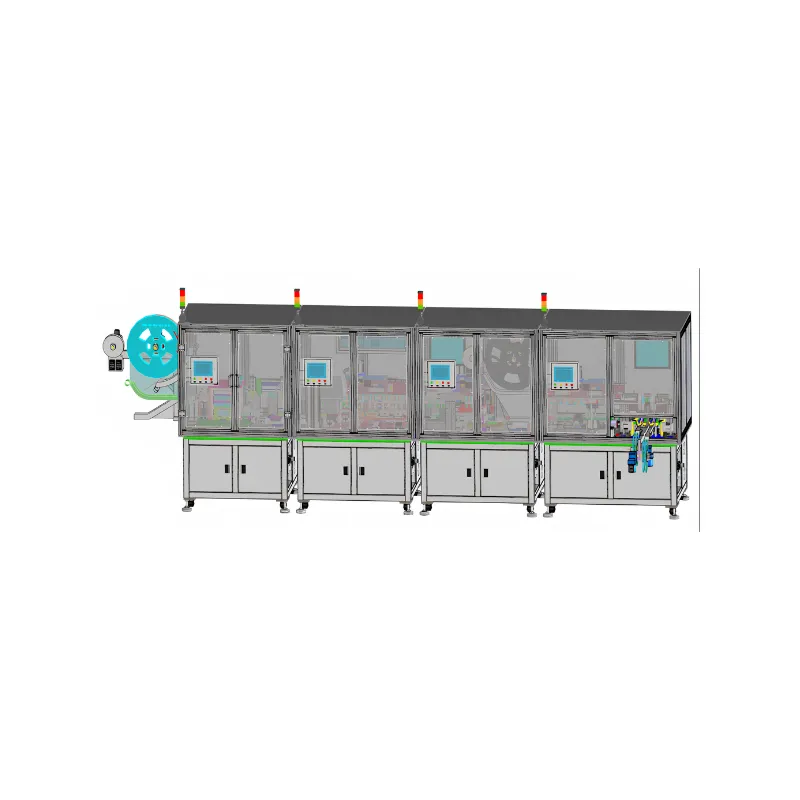
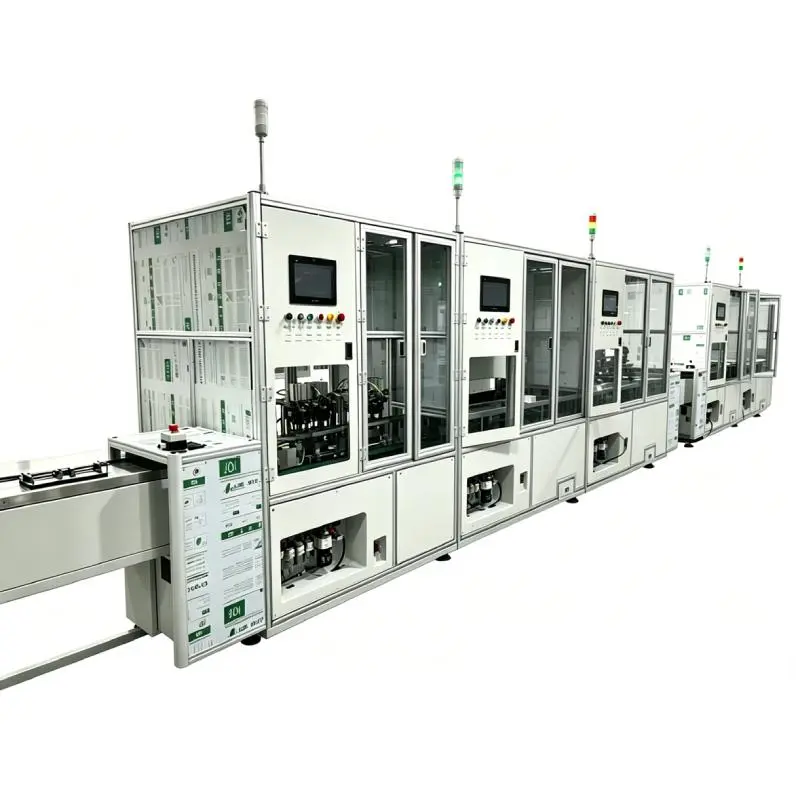
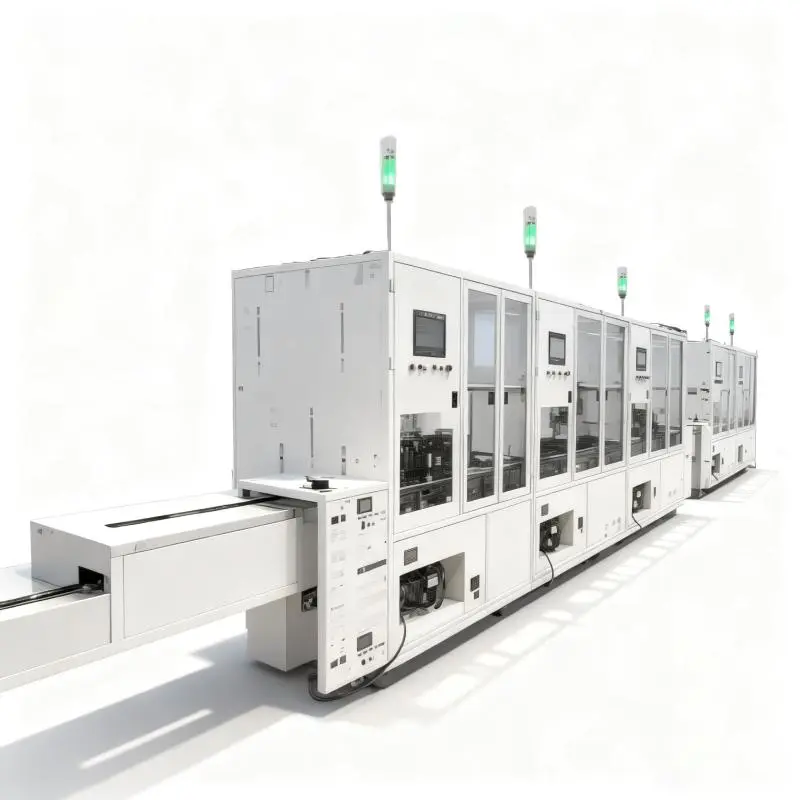
The scope covers several data families: process data (the parameters each station controls, such as temperatures, pressures, and positions), production data (counts, cycle times, machine states), quality data (vision inspection results, electrical measurements, pass/fail decisions), and equipment health data (alarms, faults, and status signals that foreshadow failures). On modern automated lines, all of this already exists inside the equipment's control system — data collection is the act of giving it somewhere useful to go. Mijoint's wire-preparing automated lines, for example, are equipped with video monitoring and remote monitoring as standard, with automatic production data traceability and a standard data interface for connecting to a MES or the company's self-developed web platform: the collection path is part of the machine's design, not an add-on.
Pain Points: Unplanned Downtime, No Predictive Maintenance, and Blind Production Decisions
When machine data is not collected, three problems dominate the daily life of a production operation.
Unplanned Downtime
Without continuous status data, equipment problems announce themselves by stopping the line. Alarms and faults that a monitoring system would surface as trends — a station taking progressively longer per cycle, an intermittent sensor fault, a parameter drifting toward its limit — remain invisible until they become stoppages. And because nothing was recorded, the post-mortem after each breakdown starts from guesswork about what preceded it.
No Predictive Maintenance
Predictive maintenance is, at its core, a data practice: it needs historical records of how the machine behaved before past failures in order to recognize the same signatures in advance. A machine that logs nothing cannot be predicted; it can only be serviced on a calendar — which either wastes life in components replaced too early or risks failures in components replaced too late. Factories without equipment data are locked into both errors simultaneously, across every machine on the floor.
Blind Production Decisions
When managers decide about staffing, scheduling, OEE improvement, or capacity without collected data, they are deciding from impressions and lagging end-of-shift reports. Which station actually limits the line's output? Is quality drifting on night shifts? Did yesterday's recipe change help or hurt? Without machine data, these questions are settled by opinion — and improvement programs stall because their effects cannot be measured.
What Data Can Automation Equipment Generate?
The available data is broader than most factories exploit. A well-instrumented automated line produces:
- Production counts and cycle data. Units completed per shift and per hour, cycle times per station, and the actual throughput against design capacity — the foundation of OEE measurement.
- Process parameters. The controlled values behind each unit: soldering temperature and pressure profiles, laser stripping settings, forming and trimming dimensions — the data that explains why a unit turned out the way it did.
- Quality and inspection results. Vision inspection outcomes, electrical test values such as four-wire Kelvin contact resistance measurements, and pass/fail decisions, each tied to the unit and the station that produced them.
- Alarms and fault records. What stopped, when, with what message — the raw material for downtime analysis and predictive maintenance.
- Unit identity and traceability data. The per-unit record — for example, inspection data stored against a laser-marked two-dimensional code — that links every measurement above to a specific product.
- Visual status. Video monitoring of the line, useful both for immediate supervision and remote diagnosis.
As a concrete illustration of what collected data reveals: Mijoint's B901 flexible assembly line is designed for an equipment utilization rate above 90% and a yield above 98%. Production and quality records can help verify these figures, track performance over time, and investigate deviations. Data collection supports performance analysis, while the actual utilization and yield also depend on the equipment, process, materials, and operating conditions.
Data Collection Methods: OPC UA, SECS/GEM, and IoT Gateways
Several standard approaches move data from equipment to systems, and most real deployments combine them:
- Direct controller connectivity. PLCs and industrial PCs hold the richest data, and modern protocols built for industrial communication — OPC UA being the most widely adopted — expose it to higher-level systems in structured, documented form. This is the preferred route for process parameters and event records.
- SECS/GEM. In semiconductor-adjacent equipment environments, the SECS/GEM standard defines how machines report events, data, and alarms to host systems; where the factory host expects it, equipment support for the standard avoids custom adaptation.
- Standard data interfaces and web platforms. Equipment that offers a documented standard data interface — such as Mijoint's wire-preparing lines, which connect to a MES or to the company's self-developed web platform — can feed both factory systems and lighter-weight platforms, which is useful when a full MES rollout is still ahead.
- IoT gateways. For equipment that lacks native connectivity, a gateway device bridges the gap: it speaks the machine's protocol on one side and the network's on the other, aggregating multiple machines into one upstream stream.
- Video monitoring. A complementary channel: remote video monitoring lets engineers see what the data says and what the machine is doing in the same view, which shortens diagnosis considerably.
The selection principle is to prefer what the equipment supports natively. A machine with a built-in standard interface collects data more reliably than one adapted through a bolted-on converter, because the data model was designed at the source rather than reverse-engineered.
Data Storage and Architecture
Collected data needs a destination, and the architecture usually has layers. High-frequency process values often land first in a historian or time-series store optimized for rapid writes and long retention. Unit-level records — identity, inspection results, traceability data — belong in the MES or quality platform, keyed to the unit identifier so records can be retrieved per product. Aggregated views — OEE dashboards, yield trends, alarm summaries — sit on top, serving dashboards to managers and reports to customers.
Two practical rules keep the architecture healthy. First, preserve unit identity end to end: data that loses its link to the product becomes statistics, while data that keeps it remains evidence. Second, automate the data exchange: whether equipment sends records to the central system or the system retrieves them automatically, the transfer should not depend on operators exporting files. Define when records are transferred and how failed transfers are detected and retried, so production data remains available and complete.
Storage decisions also have a time dimension. Process and alarm data used for maintenance analytics needs enough history to cover seasonal and product-mix variation; unit-level quality records must be retained for the period your customers' agreements specify; and dashboard data can often be aggregated and summarized without losing decision value. Deciding retention deliberately — rather than letting storage grow until it becomes a cost problem, or purging records an auditor later asks for — is part of treating data as a production asset. As volumes grow, the architecture should scale by adding storage and compute behind the same interfaces, not by redesigning the collection layer the equipment already uses.
Turning Data into Action: Analytics and Applications
Collection pays for itself only when the data drives action. The highest-value applications, in rough order of maturity:
- OEE and downtime analysis. Comparing planned and actual production time, and ranking stoppage causes by frequency and duration, tells you exactly where improvement effort belongs — replacing the traditional debate about "where the losses are" with measurement.
- Yield and defect analytics. Linking inspection results to process parameters reveals correlations: which stripping settings precede conductor defects, which soldering profiles precede joint failures. This is the path from firefighting to process tuning.
- Traceability and rapid containment. When a defect is found, per-unit records identify the affected scope in minutes — the difference between a targeted action and a blanket quarantine.
- Predictive maintenance. Alarm histories and parameter trends support condition monitoring and help teams spot recurring issues. With sufficient failure history and validated indicators, they may also support predictive maintenance, allowing some interventions to be planned before a failure.
- Remote monitoring and support. With video and status data accessible remotely, equipment suppliers and factory engineers can diagnose issues together without waiting for a site visit — one of the practical benefits of the remote monitoring built into Mijoint's wire-preparing lines.
How to Implement Machine Data Collection to Solve Operational Blind Spots
Implementation succeeds when it is staged against specific blind spots rather than attempted as one grand project:
- Start from the decisions. List the operational questions you cannot currently answer — the true bottleneck station, shift-to-shift yield differences, the top downtime causes — and collect the data those decisions require first.
- Inventory what your equipment already produces. Most modern machines already log far more than they expose. Establish, machine by machine, what interface each one offers and what data it carries.
- Close the islands first. Equipment without a standard interface is where your blind spots live; prioritize those connections, using gateways or native interfaces, before extending analytics.
- Make upload automatic. Configure continuous, machine-initiated data transfer so collection survives busy shifts — manual export steps are where collection projects quietly die.
- Keep unit identity throughout. Where the equipment supports per-unit identification — such as laser-marked codes with inspection data stored to MES — use it, so your data remains evidence rather than statistics.
- Build dashboards people actually use. The final meter — from stored data to a screen a supervisor checks each morning — determines whether collection changes behavior.
Why Choose Mijoint's Data-Ready Equipment
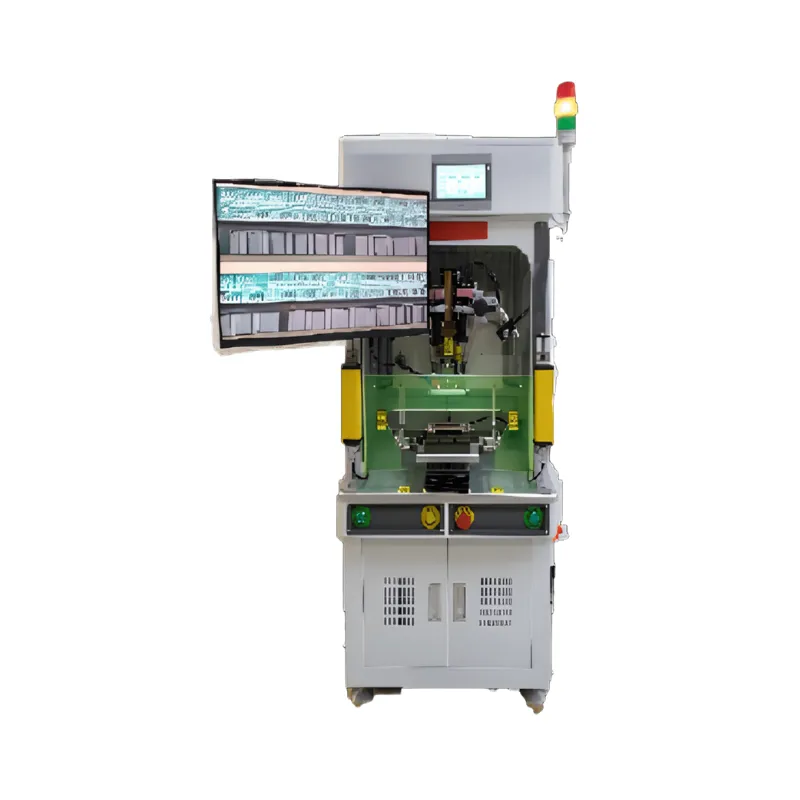
Mijoint builds data collection into its automated assembly equipment as standard design. The MCIO wire preparing automated line and CDFP wire preparing automated line combine the full wire-preparing process chain with video monitoring, remote monitoring, automatic production data traceability, and a standard data interface for MES or web-platform connection. The B901 flexible assembly line stores CCD vision inspection results and LLCR four-wire Kelvin contact resistance measurements in a MES against laser-marked unit codes — and its engineered performance, above 90% utilization and above 98% yield, is exactly the kind of result collected data makes visible and maintainable. The high-power hot bar soldering machine closes the loop on soldering temperature and pressure with sensor feedback, generating the process data your collection system is built to capture.
If your equipment or data requirements go beyond these standard configurations, contact our team to discuss a tailored automated line with the data architecture your operation needs.
Conclusion
Machine data collection for automation equipment is the difference between owning automated machines and understanding them. The data already exists inside every modern line — process parameters, cycle records, inspection results, alarms, per-unit traceability. Collecting it automatically through standard interfaces, storing it against unit identity, and acting on it through OEE analysis, yield analytics, and predictive maintenance converts unplanned downtime into managed maintenance and blind decisions into measured ones.
Choose equipment that was designed to report on itself — machines with built-in monitoring, traceability, and a standard data interface — and the collection project becomes configuration instead of construction. If you are planning to bring machine data collection to your automated lines, contact Mijoint's engineering team to request a customized equipment proposal, or visit the About Mijoint page to learn more about the company's data-ready automation equipment.