Why is MES Needed?
A Manufacturing Execution System (MES) converts raw shop-floor data into live, actionable insights. By tracking production from raw material intake to final product shipment, the system delivers the total transparency needed to optimize resources, cut lead times, and directly boost your equipment profitability.
This strict product traceability and compliance is vital for highly regulated sectors like the Artificial Intelligence, Automotive Manufacturing, Consumer Electronics, and Industrial Automation Industries. By locking in standardized workflows and continuous data logs, the software enables instant tracking and fast product recalls. In today’s fast-paced market, an MES is no longer optional—it is the core engine driving digital transformation across the automated workshop, strict quality control, and lean manufacturing.
Built on an industry-leading MES system architecture, our platform locks in four strategic capabilities for your facility:
Intelligent Coordination: Shares critical manufacturing data—like planned vs. actual output and asset availability—to instantly align factory operations with resource allocation.
Precision Traceability: Connects to a unified manufacturing database to log complete production histories, ensuring strict quality compliance and fast root-cause isolation.
Continuous Optimization: Tracks key metrics like Overall Equipment Effectiveness (OEE), cycle time (CT), downtime, and changeover durations to wipe out bottlenecks and drive lean improvements.
Core Function Overview
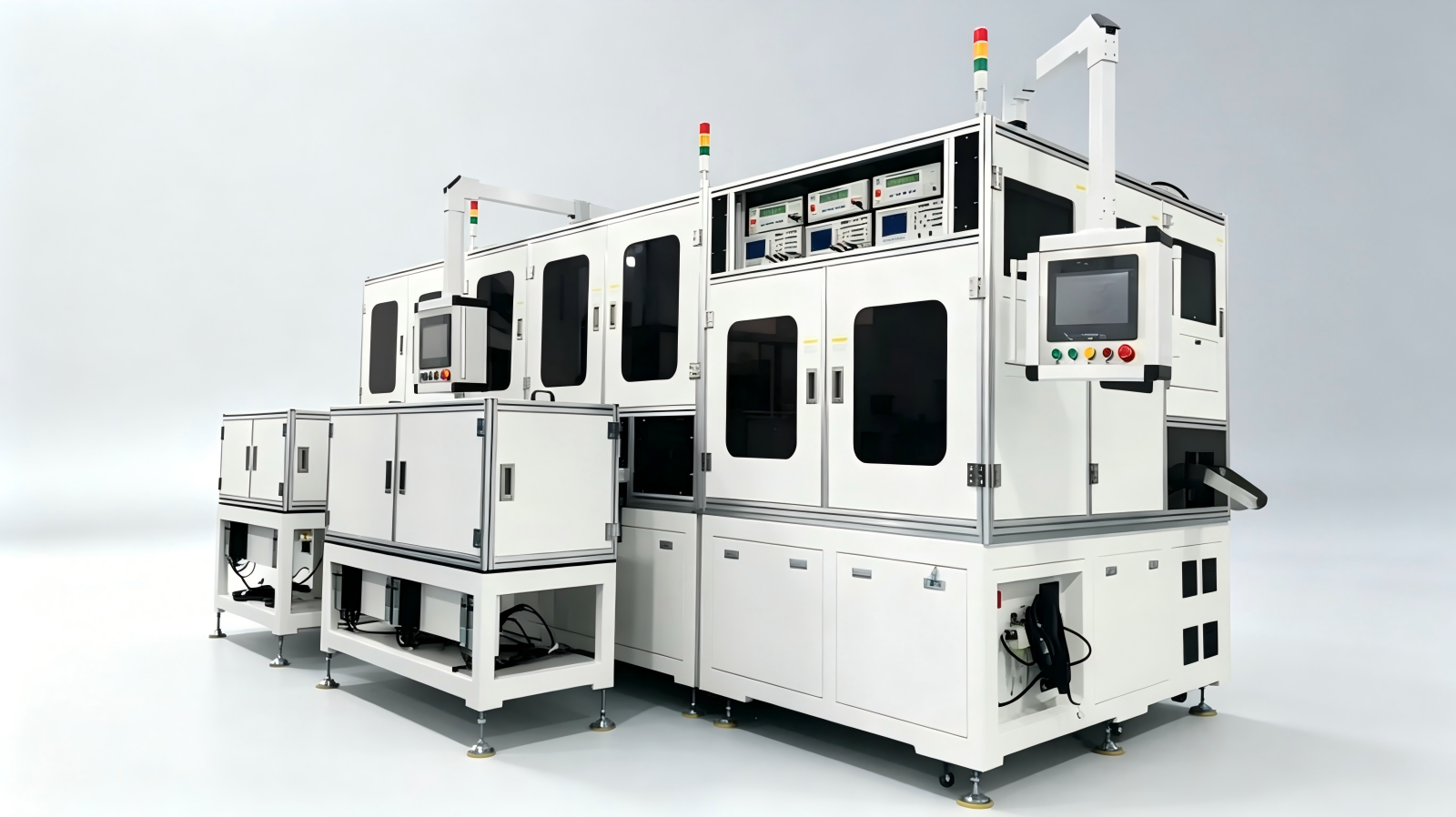
Precision manufacturing requires consistent repeatability and highly controlled production processes. In connector production, dimensional tolerances are often extremely small, especially for high-density and miniaturized products used in automotive electronics, communication systems, and industrial equipment. Manual assembly methods struggle to maintain stable accuracy under continuous production conditions.
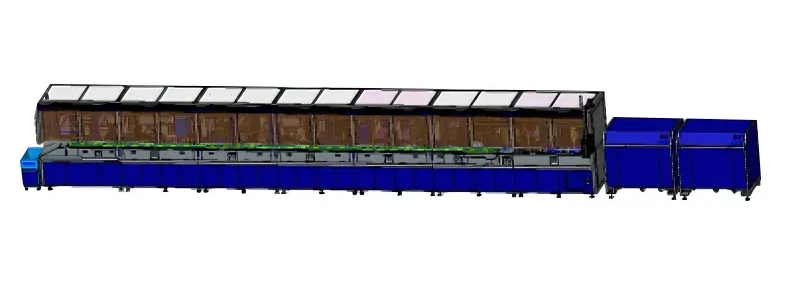
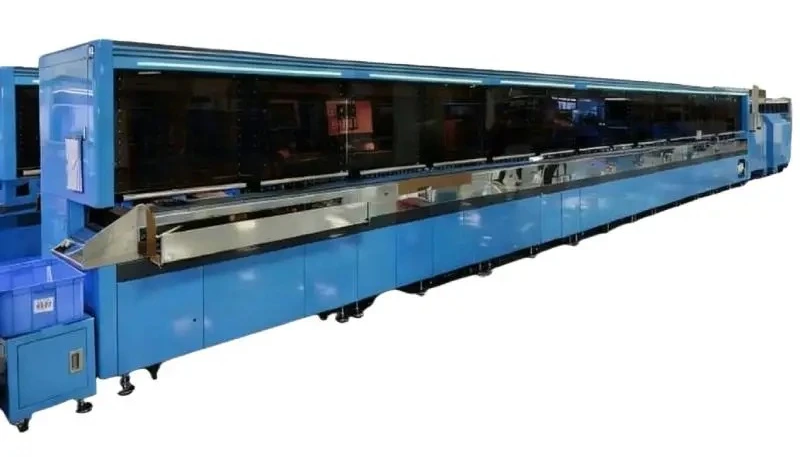
An automatic connector assembly line uses servo motion control, intelligent positioning systems, and automated process management to achieve consistent assembly precision. Automated systems can maintain repeatability within very tight tolerances while reducing assembly deviations caused by operator fatigue or inconsistent manual handling. This level of stability is essential for products requiring precise terminal positioning and reliable electrical contact performance.
Automation also significantly improves manufacturing efficiency. Modern production environments require continuous operation and rapid throughput. Automated systems support 24/7 production with stable cycle times and lower defect rates. As production volumes increase, automation becomes a key factor in maintaining competitiveness while controlling labor and quality management costs.
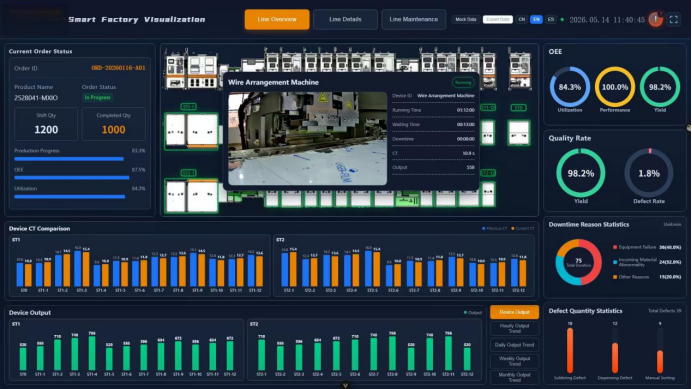
The core strength of our Data Intelligence Control System comes down to universal equipment compatibility. Engineered as a centralized real-time production data monitor tailored to integrate varied equipment data across your entire factory, it achieves a unified workshop strategy of "single-screen overview, intelligent scheduling, and real-time alerts." This central nervous system eliminates data silos by capturing and standardizing real-time operational data directly from all automation equipment and your most critical factory assets:
Our MES software processes high-volume machinery data to drive immediate action:
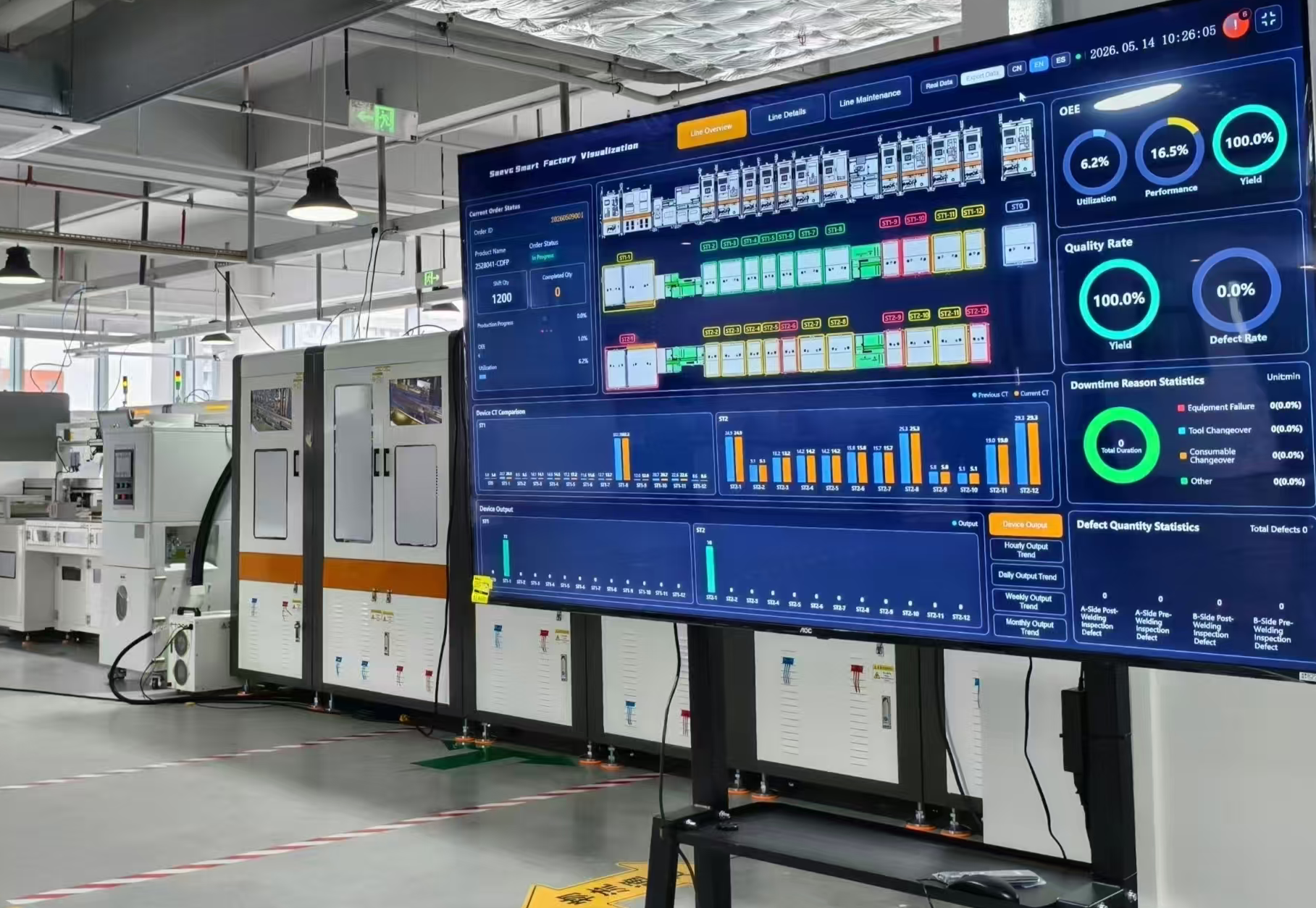
Production Efficiency Panoramic Monitoring-Improving Output and Yield
Real-time tracking displays a comparison of planned versus actual output by day, shift, and hour. A dynamic quality dashboard monitors product yield trends to isolate exactly when and where quality issues occur, while clear efficiency analysis highlights equipment downtime and categorized root causes.
Real-Time Equipment Status Visualization-Ensuring Production Continuity
The operational status (Running, Standby, Breakdown, Maintenance) of each automated asset is visible at a glance via "Red/Yellow/Green" indicator lights, accompanied by a real-time scrolling display of key operating parameters from core equipment.
Anomaly Early Warning Center-From Passive Response to Active Prevention
When equipment failures, parameter exceedances, or quality anomalies occur, the system deploys instant warnings via large-screen pop-ups, audible alarms, and message notifications. A complete historical log archives all alarm events, supporting multi-dimensional searches by time, equipment, and type.
Key Application Scenarios: On-Site Production Floor vs.Office Management
Our system adapts seamlessly to different operational environments, splitting deployment into two strategic application scenarios to serve both shop-floor workers and corporate leadership.
Scenario A: Production Factory Monitoring Screen (On-Site Execution)
This layout focuses heavily on "real-time data, instant alerts, and strict execution" directly on the shop floor to improve quality control and eliminate manual paperwork to maintain a paperless shop floor.
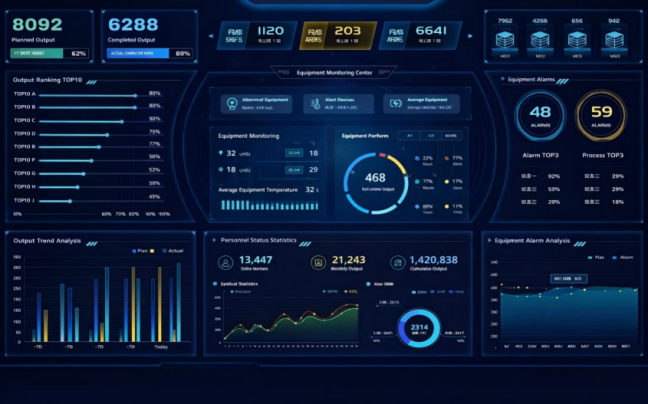
Overall Production Progress: Simultaneous visual tracking of planned vs. actual output for the current shift/day via dynamic progress bars and numerical values, alongside hourly output per machine, output per workgroup, and daily output tracking.
Live Machine Feed & Alerts: Real-time dynamic video feeds of each machine in operation, combined with an equipment abnormal alarm display that features real-time scrolling alerts (equipment, workstation, abnormality description, time) and full-screen flashing indicators for emergency shutdowns.
Early Warning & Task Dashboard: Visual tracking for non-real-time early warnings (e.g., consecutive yield decline trends, equipment maintenance reminders) and the live execution status of critical production tasks or improvement items.
Scenario B: Office Management Dashboard (Analysis & Decision-Making)
Optimized specifically for management, this platform interface condenses complex factory metrics into long-term strategic insights, focusing on "deep data analysis, long-term trends, and strategic decision-making."
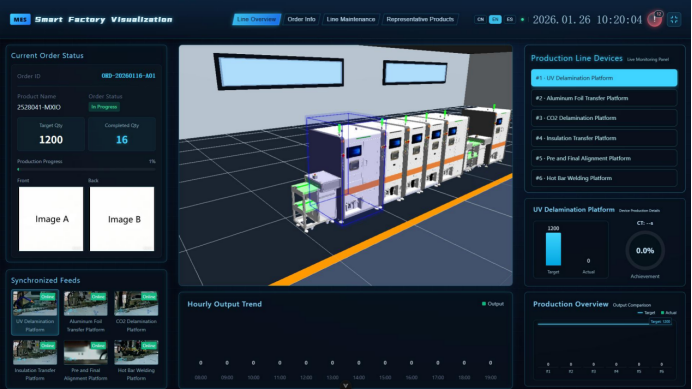
Production Progress and Efficiency: Automated generation of Overall Equipment Effectiveness (OEE) bar charts (Daily/Weekly/Monthly) alongside real-time scrolling data comparing actual production volume to projected output.
Cross-Line Comparisons: Horizontal comparison bar charts mapping daily and shift-based output, efficiency, and quality metrics across multiple production lines/shifts, supplemented by precise production cycle time (CT) tracking for each piece of equipment.
Equipment Downtime Statistics: Granular data table export logs tracking exact downtime and changeover times per machine, allowing engineering teams to eliminate micro-stoppages, reduce WIP (Work-in-Progress) inventory, and streamline database reporting.
System Summary
In summary, this unified architecture ensures a perfect, data-driven closed-loop management ecosystem. The Factory Screen drives on-site execution, while the Office Dashboard powers executive decisions. Because all metrics flow from a single data source, your facility maintains total information consistency. Furthermore, the platform natively supports Chinese, English, and Spanish, enabling seamless cross-border collaboration across global manufacturing hubs like Europe、Mexico and Southeast Asia.
Optimize Your Automated Production Line Today
Deploying a centralized, intelligent MES infrastructure is vital for moving toward a digital smart factory. It not only eliminates manual paperwork to achieve comprehensive shop-floor paperless operations and end-to-end traceability, but also serves as the commercial engine that boosts your core competitiveness and connects your business with global premium supply chains.
Exploring our modular automation architectures, system configurations, and specialized equipment integration capabilities. Utilize the Smart Factory Automation Platform to analyze how live data dashboards track and optimize real-time workshop performance.
FAQ:
Q1:What is manufacturing execution system software?
MES software serves as a central hub for managing, controlling and optimizing manufacturing execution and processes. It empowers your teams to make informed decisions across the shop floor and address issues in real time.
Q2: What industries benefit most from this MES software?
Artificial Intelligence Industry, Automotive Manufacturing Industry, Consumer Electronics Industry, and Industrial Automation Industry are benefit most from it. It excels in environments requiring absolute precision, high-volume automation, and dense data tracking.
Q3: How does MES improve quality control and compliance?
The system locks in standard operations and records step-by-step production history for regulatory audits. It tracks live yield drops so quality teams can catch defects early and reduce factory scrap.
Q4: Does the system support real-time data collection and analysis?
Yes. The software connects to a single database . Floor metrics sync instantly to the factory screens, while management dashboards collect long-term data for trend analysis.
Q5: How does the MES software help with predictive maintenance?
The system logs real-time machine statuses (Running/Standby/Fault/Maintenance) alongside key running parameters. This builds a complete history so engineers can analyze downtime causes and fix issues before hardware failures happen.