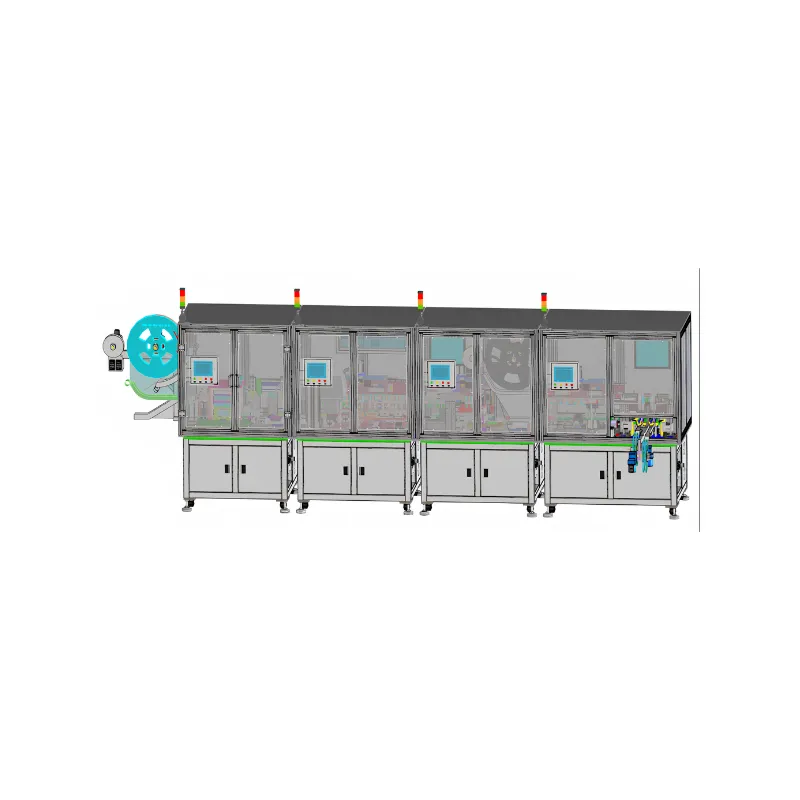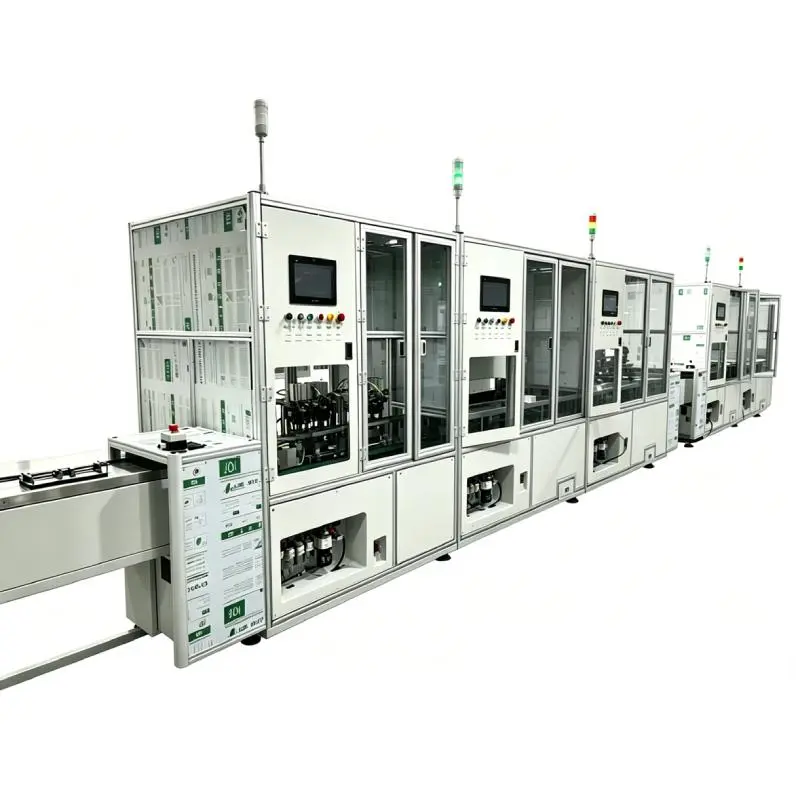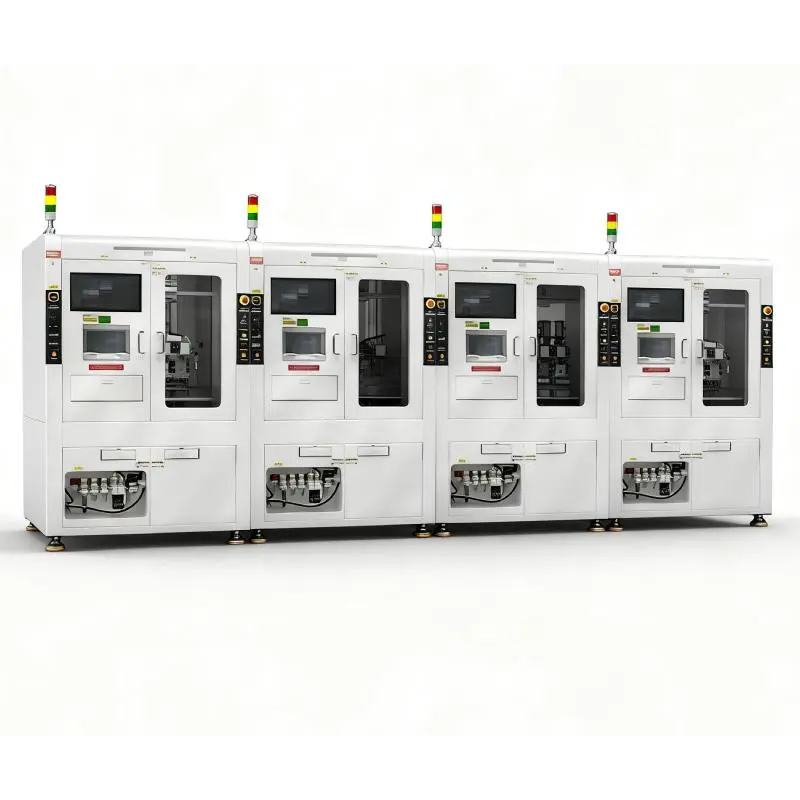
As a result, manufacturers are increasingly adopting automated cable assembly lines for high-speed cables to improve process consistency, increase throughput, and support demanding quality requirements. By integrating wire preparation, connector assembly, soldering, dispensing, inspection, and traceability into a unified workflow, automation enables manufacturers to build scalable production systems capable of supporting next-generation networking and computing infrastructure.
1. Wire Preparation
Wire preparation forms the foundation of every high-speed cable assembly. Before assembly can begin, multiple cable layers—including aluminum foil shielding, dielectric materials, insulation layers, and conductors—must be processed accurately without damaging the internal cable structure. Even small deviations during stripping or foil removal can affect signal performance and create challenges for downstream assembly operations. For this reason, modern production lines increasingly rely on laser-based processing technologies that provide consistent and repeatable results across large production volumes.
To support these requirements, automated preparation solutions integrate UV laser stripping, CO₂ laser stripping, foil removal, conductor trimming, and cable handling into a continuous manufacturing process. Solutions such as the MCIO Wire Preparing Automated Line, CDFP Wire Preparing Automated Line, NS100 Automated Line, IZUMI Automated Line, and QSFP-DD Cable Preparing Automated Line are specifically designed for high-speed cable processing applications. These systems help manufacturers improve preparation consistency, reduce manual intervention, and create a stable foundation for subsequent cable assembly operations.
2. Cable Assembly
Once wire preparation is completed, the processed cable must be assembled with connectors and related components. High-speed cable assemblies often require accurate connector loading, conductor positioning, wafer alignment, and component placement to ensure both electrical and mechanical performance. As connector designs become more compact and transmission speeds continue to increase, maintaining assembly accuracy becomes increasingly important for product reliability and manufacturing consistency.
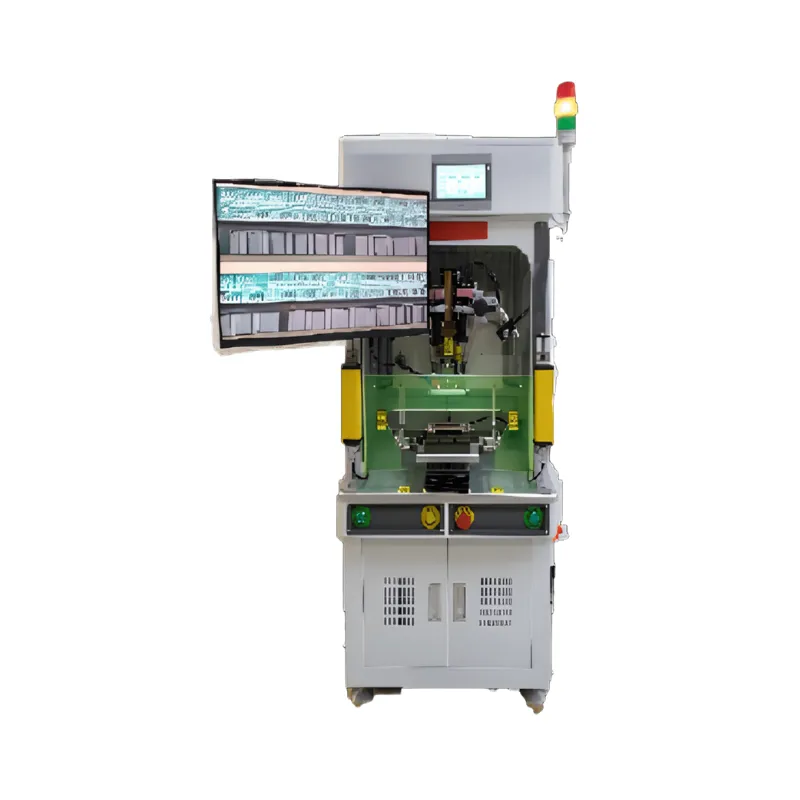
Automated cable assembly systems utilize intelligent positioning mechanisms, vision-guided alignment technologies, and precision handling modules to improve assembly consistency. Depending on production requirements, manufacturers can choose between the Fully Automatic Series for high-volume production and the Semi-Automatic Series for flexible manufacturing environments. These solutions support connector loading, alignment, assembly, and inspection within a controlled automated workflow while helping manufacturers maintain stable production performance.
3. Soldering and Welding
Soldering and welding processes are among the most critical stages in high-speed cable manufacturing because they directly influence signal integrity, connection reliability, and long-term product performance. High-speed interconnect products often involve fine conductors, compact connector structures, and heat-sensitive materials, requiring precise control of both alignment and thermal input throughout the joining process.
Modern automated cable assembly lines integrate advanced joining technologies such as Hot Bar Soldering, PGRS Soldering, and Resistance Welding. Equipment options include the Dual-Station Hot Bar Soldering Machine, In-Line PGRS Soldering Machine, High-Power Hot Bar Soldering Machine, 3D Vision-Guided PGRS Soldering Machine, and Single-Station Resistance Welding Machine. Combined with intelligent vision alignment and process monitoring systems, these solutions help manufacturers achieve consistent joining quality while supporting high-speed production environments.
4. Dispensing and Reinforcement
Many high-speed cable assemblies require adhesive dispensing and structural reinforcement to improve long-term durability and protect critical connection points. Adhesives may be used to reinforce solder joints, secure cable components, improve strain relief, or provide additional environmental protection. Because dispensing quality directly affects product reliability, precise material placement is essential throughout the manufacturing process.
Automated dispensing systems utilize programmable motion control and vision-guided positioning technologies to ensure consistent adhesive application. Solutions such as the Desktop Dispensing Machine and Desktop Jetting Vision Dispensing Machine can be integrated into automated production lines or deployed as standalone workstations. These systems help manufacturers improve dispensing accuracy, reduce process variation, and maintain stable product quality while supporting different adhesive materials and product configurations.
5. Inspection and Testing
As transmission speeds increase and connector designs become more complex, inspection and testing play an increasingly important role in maintaining product quality. Small assembly deviations can have a significant impact on signal performance, making comprehensive quality verification an essential component of high-speed cable manufacturing. Modern production lines therefore incorporate inspection technologies throughout the manufacturing process rather than relying solely on end-of-line verification.
Machine vision systems, Automated Optical Inspection (AOI) technologies, dimensional measurement tools, and process verification systems work together to monitor assembly quality in real time. These inspection capabilities help manufacturers identify deviations early, reduce quality risks, and improve process consistency. By integrating inspection directly into the production workflow, automated cable assembly lines support continuous quality control while minimizing the cost of rework and product defects.
6. Data Traceability
Modern manufacturing requires more than efficient production; it also requires complete visibility into the manufacturing process. Data traceability has therefore become a critical component of automated cable assembly lines, allowing manufacturers to capture and manage production information throughout the product lifecycle. Parameters such as stripping conditions, soldering data, inspection results, and process records can be automatically collected and associated with specific products or production batches.
This production data provides valuable support for quality management, process optimization, and continuous improvement initiatives. In addition, many automated cable assembly lines include standard communication interfaces that enable integration with Manufacturing Execution Systems (MES) and factory management platforms. These digital capabilities help manufacturers build data-driven production environments while supporting future Industry 4.0 and smart factory initiatives.
7. Why Choose Mijoint
Mijoint Intelligent Technology specializes in automation solutions for high-speed cable manufacturing, connector assembly, and intelligent inspection systems. Our portfolio includes Fully Automatic Series solutions for integrated production lines and Semi-Automatic Series solutions for flexible manufacturing requirements. From wire preparation and assembly to soldering, dispensing, inspection, and traceability, Mijoint provides equipment designed to support the complete manufacturing lifecycle of high-speed cable products.
Our solutions include the MCIO Wire Preparing Automated Line, CDFP Wire Preparing Automated Line, NS100 Automated Line, IZUMI Automated Line, and a complete range of Fully Automatic Series and Semi-Automatic Series solutions. By combining engineering expertise, advanced automation equipment, and comprehensive technical support, Mijoint helps manufacturers improve productivity, enhance process consistency, and build scalable production capabilities for the next generation of high-speed connectivity products.
Conclusion
As demand for AI infrastructure, cloud computing, and high-speed networking continues to grow, manufacturers need more advanced production technologies to support increasingly complex cable assembly products. Automated cable assembly lines provide a structured approach to integrating wire preparation, cable assembly, soldering, dispensing, inspection, and traceability into a unified manufacturing workflow that improves quality, efficiency, and scalability.
By adopting automation technologies across the entire production process, manufacturers can improve consistency, strengthen quality control, and create production systems capable of supporting future market requirements. Whether for MCIO, CDFP, QSFP-DD, NearStack, or other high-speed interconnect products, the right automation strategy provides a strong foundation for long-term manufacturing success.
Send your cable specifications, connector type, target output, and inspection requirements for an automated cable assembly line evaluation. Our engineering team will recommend the most suitable solution based on your production requirements.