The manufacturing landscape for high-frequency communication, automotive electronics, and AI server components has undergone a radical transformation. As devices become smaller and more complex, the demand for reliable, ultra-fine electrical connections has surged. A Precision Resistance Welding Machine for Cable Assembly has become an indispensable tool in this evolution, providing the high-level accuracy required for modern cable and connector manufacturing. This guide explores the technology, applications, and strategic advantages of implementing precision resistance welding in modern production environments.
Precision resistance welding operates on the principle of generating heat through the electrical resistance of the materials being joined. By applying a controlled electrical pulse and mechanical pressure, the machine creates a localized bond without the need for additional filler materials like solder. This process is particularly effective for cable assembly where maintaining signal integrity and minimizing thermal damage to surrounding insulation are critical.
Understanding the nuances of this technology is the first step toward optimizing a production line. From the fine control of pulse width to the real-time monitoring of welding pressure, every parameter plays a role in the final quality of the joint. As we explore the capabilities of these machines, it becomes clear why they are widely adopted in cable assembly and connector manufacturing environments where consistency, precision, and process control are essential.
1. Technical Foundations of Precision Pulse Heating
At the heart of a high-end Precision Resistance Welding Machine for Cable Assembly lies the pulse heating system. Unlike continuous heating methods, pulse heating delivers energy in extremely short, precise bursts, typically measured in milliseconds. This allows for a rapid rise in temperature at the specific contact point, followed by immediate cooling, which prevents the heat from spreading to sensitive components or melting the wire insulation.
Modern systems utilize advanced electronic control units to regulate the output voltage and duration with high resolution. For instance, sophisticated machines can offer pulse width resolutions as fine as 0.1 ms and voltage adjustments in 0.01 V increments. This level of granularity ensures that even delicate conductors and fine wires can be welded efficiently while maintaining product quality and conductor integrity.
Beyond the electrical pulse, the mechanical pressure sensing system is equally vital. By integrating high-precision pressure sensors, the equipment can ensure that the thermode—the welding tip—applies exactly the right amount of force before the current is discharged. This synergy between electrical energy and mechanical pressure creates consistent, high-conductivity joints that are essential for high-speed data transmission and stable power delivery.
2. Core Scenarios: Cable Terminal and Connector Welding
Cable terminal welding is one of the most demanding applications for a Precision Resistance Welding Machine for Cable Assembly. In sectors like automotive manufacturing and consumer electronics, terminals must withstand significant vibration and thermal cycling. Resistance welding provides a superior mechanical and electrical bond compared to crimping or soldering, as it fuses the terminal and the wire into a single metallurgical entity, resulting in reliable conductivity and long-term durability.
Connector welding, particularly for high-speed interfaces like NearStack or SAS Gen5, requires extreme precision due to the high density of pins and the fragility of the plastic housings. Precision resistance welding allows for the joining of multiple wires to a connector wafer in a single, automated process. Because the heat is highly localized, the risk of warping the connector housing or creating accidental bridges between pins is minimized, which is a common challenge in traditional joining processes.
In high-speed cable assembly applications, maintaining stable electrical conductivity and mechanical strength is critical. Precision resistance welding helps create repeatable wire-to-terminal and wire-to-connector connections while minimizing thermal impact on adjacent insulation materials and connector housings. Real-time process monitoring further supports consistent welding quality throughout production.
3. Enhancing Efficiency through Automated Solutions
The integration of precision welding into automated production lines is a significant advancement for manufacturing efficiency and process consistency. Traditional manual assembly of cable and connector components is often characterized by variable quality, lower efficiency, and high dependence on operator skill.
By deploying an automated Precision Resistance Welding Machine for Cable Assembly, manufacturers can reduce manual intervention, improve process consistency, and support higher production throughput.
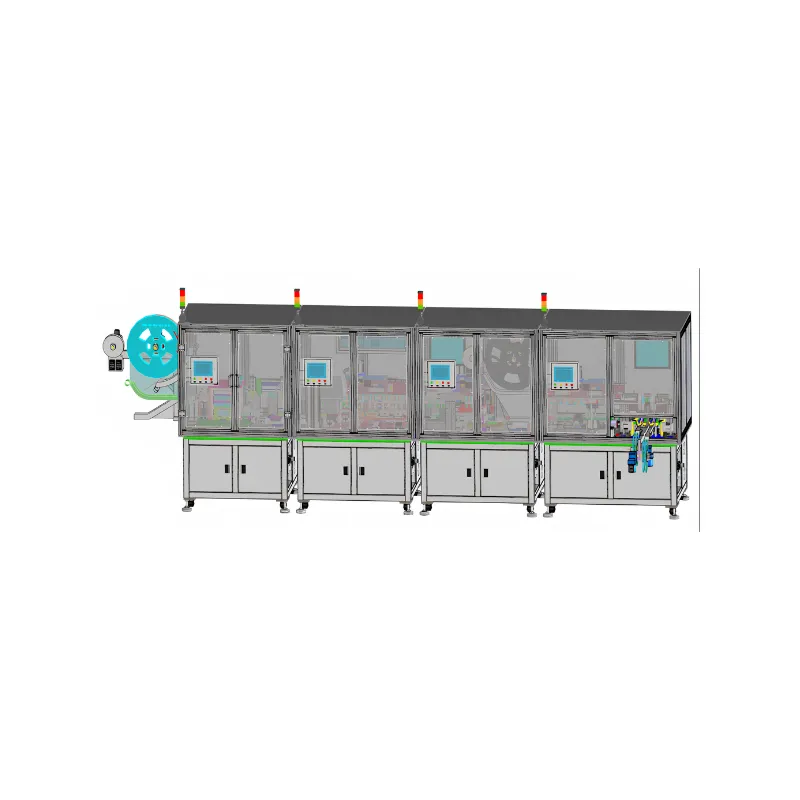
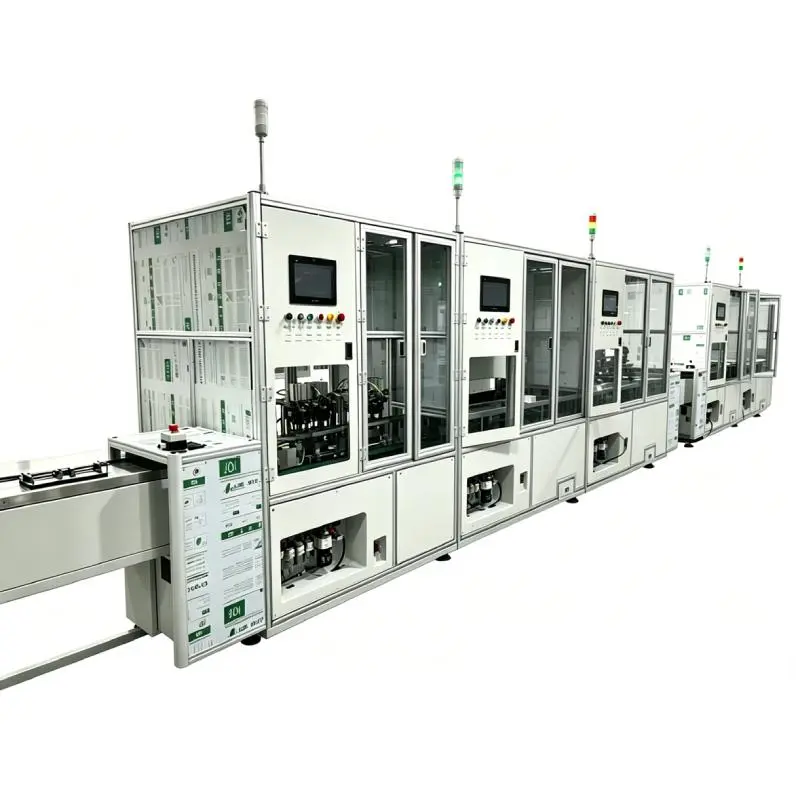
Automation also brings the benefit of standardized processes. Modular designs allow these welding stations to be integrated into larger lines that handle everything from wire stripping and pre-forming to final inspection and packaging. In automated cable assembly environments, precision resistance welding can be integrated with wire cutting, stripping, terminal processing, connector insertion, inspection, and testing processes to create a streamlined manufacturing workflow.
Furthermore, the data traceability provided by automated systems is essential for modern quality standards like ISO 9001. Every welding parameter—pressure, current, voltage, and time—can be recorded for every single joint. This data can then be integrated into Manufacturing Execution Systems (MES), allowing for full process traceability. If a quality issue occurs in the field, manufacturers can review the production history and process parameters associated with the product.
4. Addressing Challenges in High-Precision Cable and Connector Assembly
Manufacturing high-speed cable assemblies and compact connector systems presents unique challenges due to increasingly smaller conductor sizes, tighter connector spacing, and higher quality requirements. Working with fine conductors requires a machine capable of delivering accurate force control and rapid process response. The thermode design must be precisely positioned and durable enough to maintain stable performance throughout long production runs.
Another challenge is the variety of products involved. Production lines often need to switch between different wire specifications, terminal designs, connector models, and cable assembly configurations. A flexible Precision Resistance Welding Machine for Cable Assembly with rapid changeover capabilities allows manufacturers to respond efficiently to changing production demands and support high-mix manufacturing environments.
Finally, the environmental and reliability requirements of industries such as automotive manufacturing necessitate welds that can survive harsh operating conditions. Resistance welding is widely adopted because it creates durable metallurgical connections without introducing additional joining materials. The resulting joints can maintain stable performance under vibration, temperature fluctuations, and demanding operating environments.
5. Why Choose Mijoint for Precision Welding Technology
Mijoint Intelligent Technology (Guangdong) Co., Ltd. stands at the forefront of industrial automation, offering extensive experience in delivering high-precision manufacturing solutions. Our expertise spans industries such as AI infrastructure, automotive electronics, consumer electronics, and data communications, where precision cable and connector assembly is critical to product performance.
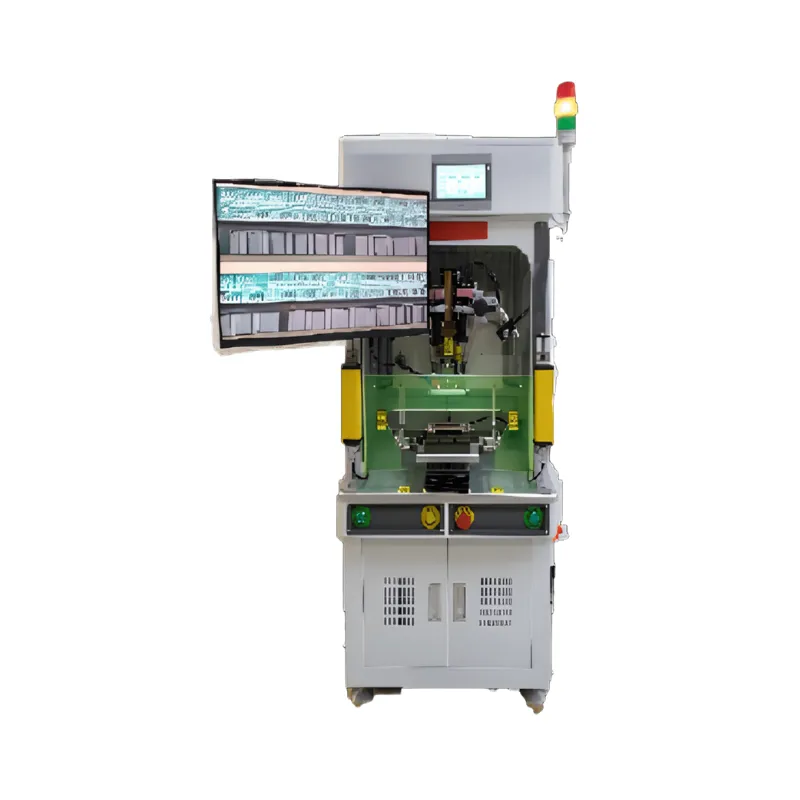
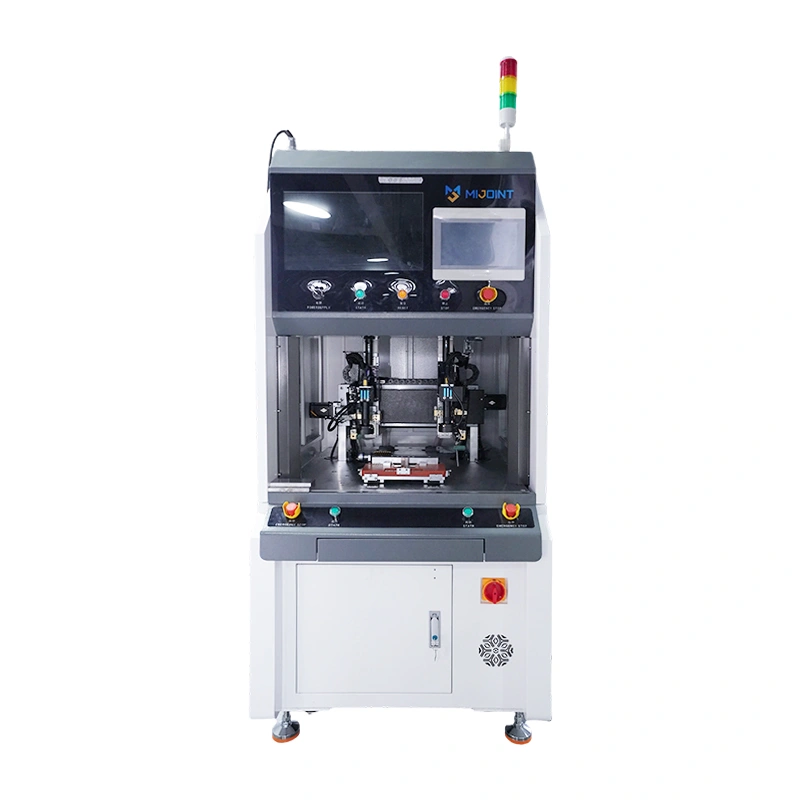
Our flagship Precision Resistance Welding Machine for Cable Assembly is a testament to our commitment to engineering excellence. This electronic spot welder is designed for cable and connector manufacturing applications, featuring advanced pressure sensing and real-time current monitoring to support stable and repeatable welding quality. Whether deployed as a standalone workstation or integrated into a fully automated connector assembly line, our equipment provides the precision and reliability required by modern electronics manufacturing.
Choosing Mijoint means more than purchasing equipment. We provide comprehensive engineering support, including technical consultation, process evaluation, solution design, commissioning assistance, training, and long-term technical service. Our modular automation platforms and intelligent inspection technologies help manufacturers improve efficiency while maintaining flexibility for future production needs.
Conclusion and Future Outlook
The adoption of a Precision Resistance Welding Machine for Cable Assembly is becoming increasingly important for manufacturers seeking higher levels of quality, consistency, and automation. As cable designs become more compact and data transmission requirements continue to increase, precision welding technologies will play an increasingly important role in cable assembly and connector manufacturing.
Mijoint continues to innovate by developing advanced welding solutions and intelligent control systems that address the evolving needs of the industry. From high-speed data cables to complex AI server harnesses, our solutions are designed to support stable production, consistent welding quality, and long-term manufacturing reliability.
Send your cable drawing, terminal design, material specification, and target cycle time for welding feasibility evaluation. Our engineering team will recommend the most suitable welding solution based on your production requirements.