Rapidly changing consumer demands, shrinking product lifecycles, and the explosive growth of high-tech sectors—such as AI servers, 5G communications, and New Energy Vehicles (NEVs)—place immense pressure on modern manufacturing. Traditional assembly approaches often force businesses into a difficult choice: invest heavily in dedicated, single-purpose lines that risk obsolescence when product designs change, or rely on manual labor that limits throughput, consistency, and quality.
To resolve this dilemma, forward-thinking manufacturers are transitioning to a flexible, future-proof approach. Implementing a modular automation platform for scalable assembly lines has become a strategic necessity in high-tech industries. By breaking down complex assembly processes into standardized, interchangeable building blocks, this technology allows manufacturers to scale production up or down with minimal friction, safeguarding capital investments and drastically reducing time-to-market.
What Is a Modular Automation Platform?
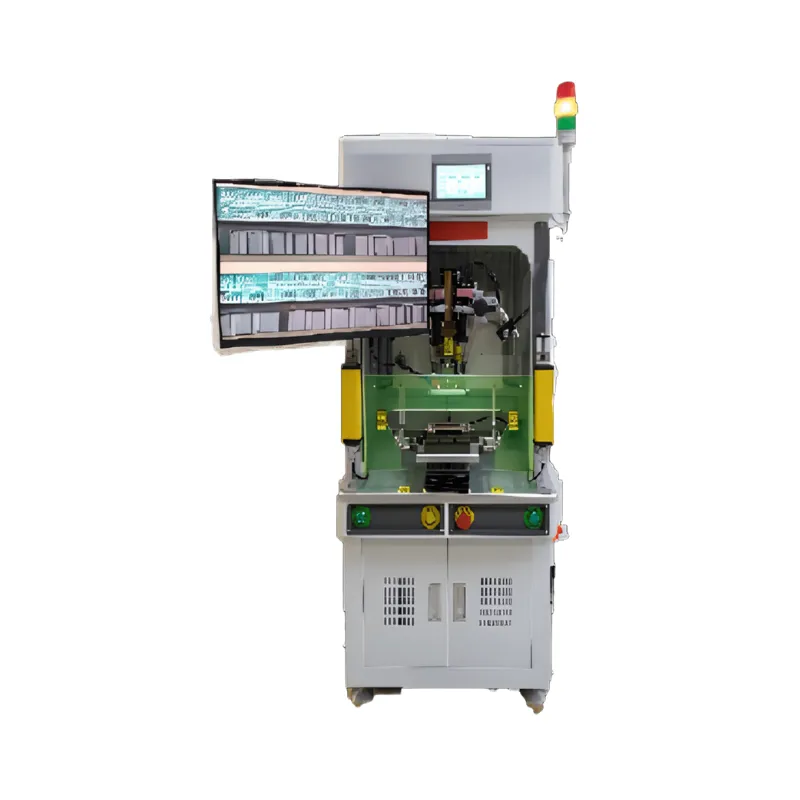
A modular automation platform is a standardized, highly reconfigurable manufacturing system engineered to adapt dynamically to changing production requirements. Unlike traditional rigid lines, where stations are permanently welded or hard-wired together, a modular platform treats every production step—such as feeding, wire stripping, laser welding, dispensing, or inspecting—as an independent, standardized module.
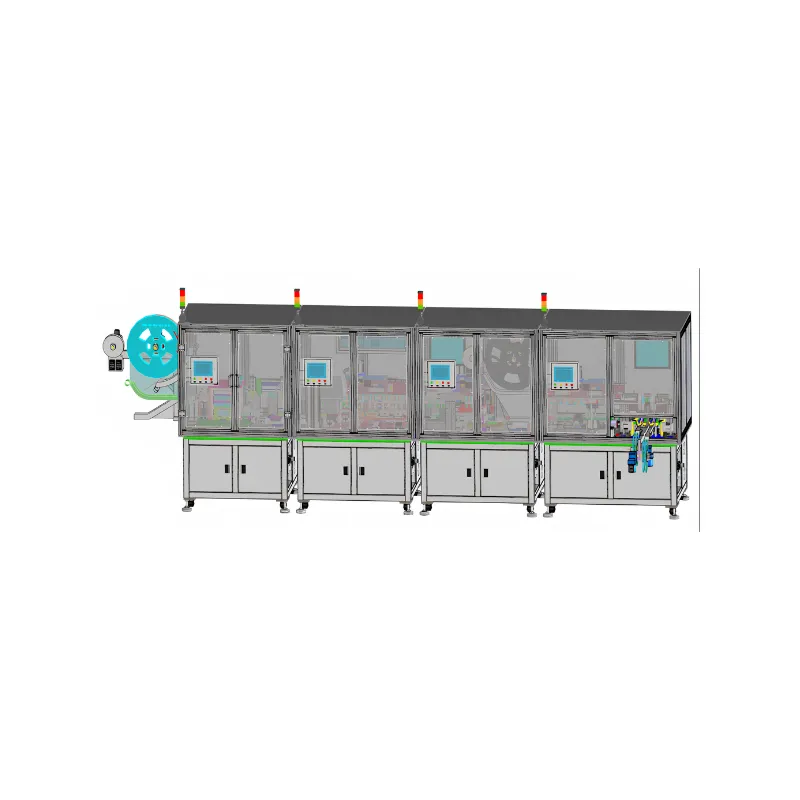
These modules plug into a universal base equipped with standardized mechanical, electrical, software, and pneumatic interfaces. This architecture decouples the processing stations from the main transfer line, allowing manufacturers to achieve two distinct operating modes:
- Standalone Operation: Running individual modules independently for pilot runs, prototyping, or low-volume process validation.
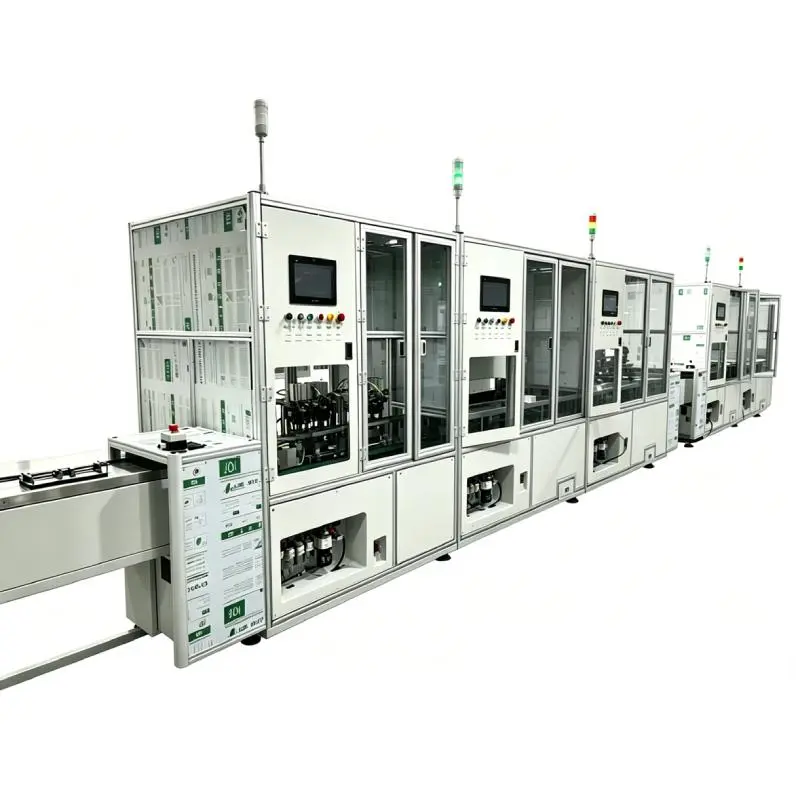
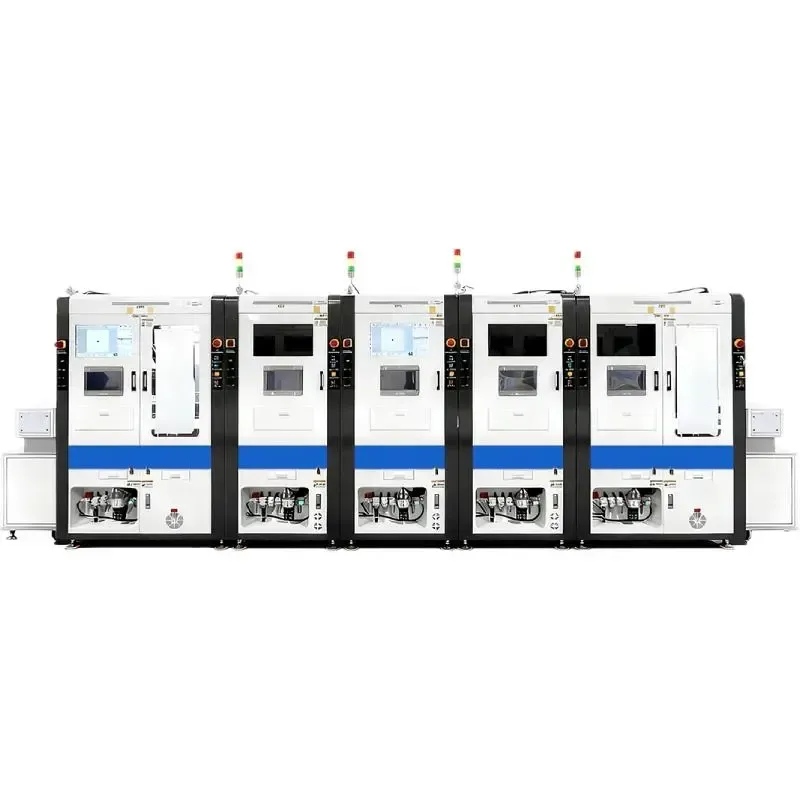
- Integrated Line Production: Rapidly linking multiple modules together to form a continuous, high-volume automated assembly line.
This dual-drive flexibility directly addresses the classic conflict between low-volume prototyping and high-speed mass manufacturing, significantly optimizing equipment utilization and maximizing return on investment (ROI).
Core Modules of a Standardized Assembly Platform
A high-performing standardized assembly platform relies on several key components working in harmony to ensure seamless, high-precision operation:
1. Material Handling & Transfer Module
This is the backbone of the platform, responsible for transporting parts between stations with extreme speed and precision. It utilizes standardized runner fixtures with a travel range of 0 to 450 mm. These fixtures achieve high-speed travel of up to 200 mm/s and exceptional repeatability of up to ±0.02 mm. Precision is further enhanced at individual stations using a secondary positioning mechanism, achieving a jaw secondary positioning accuracy of ±0.01 mm on both the X and Y axes.
2. Process-Specific Stations
These are the functional "plug-and-play" units that perform the actual manufacturing tasks. Depending on the product requirements, these can include:
- Laser Stripping & Preparing: Utilizing high-power lasers (such as Coherent 30W CO2 or UV lasers) for ultra-precise dielectric and aluminum foil stripping.
- Precision Joining: Hot bar soldering, resistance welding, or laser welding stations.
- Automatic Dispensing: UV automatic dispensing modules with integrated curing systems.
- Advanced Wire Processing: High-speed wire preparing, conductor pre-forming, and final-trimming.
3. Enclosure & Utility Blocks
Safety and structural integrity are integrated into the platform's foundation. The structural frame is built from national standard aluminum section steel, enclosed with 8 mm thick PC explosion-proof sheets to protect operators. Utilities are centralized, requiring a standard air supply pressure of 0.5–0.7 MPa and a standard electrical input (AC220V 50Hz) to power the integrated 18.5 kW system.
Modular Automation vs. Fully Custom Automation: Choosing the Right Strategy
Both modular platforms and fully custom automation systems play vital roles in modern manufacturing. Rather than one being universally superior, they serve different production strategies and lifecycles.
- Fully Custom Automation is engineered from the ground up for a specific product. It is highly effective for mature, high-volume products with stable designs that will not change for several years. In these scenarios, custom lines offer maximum throughput and optimized footprints.
- Modular Automation Platforms are designed for flexibility and rapid deployment. They are ideal for fast-evolving industries, high-mix low-volume (HMLV) production, and products undergoing frequent design iterations. By utilizing standard bases that accommodate over 95% of product specifications, they allow manufacturers to adapt to new requirements through simple module swaps and software reconfiguration.
| Evaluation Metric | Fully Custom Automation | Modular Automation Platform |
|---|---|---|
| Best-Fit Scenario | Long-lifecycle products, stable designs, ultra-high volume | Rapidly iterating designs, high-mix production, phased capacity scaling |
| Initial Lead Time | 6 to 12 months (due to ground-up engineering and design cycles) | 45 to 75 days (relying on pre-engineered, standardized modules) |
| Line Reconfiguration | Requires extensive physical redesign, rewiring, and high CAPEX | Simple swap of standardized functional modules on a universal base |
| Capital Risk | High (the line may need to be scrapped if the product design changes prematurely) | Low (modules and base units can be reconfigured and reused for future projects) |
| Equipment Utilization (ROI) | High during peak production; low during product transitions | Consistently high across multiple product generations and project lifecycles |
| Deployment Phase | Requires longer on-site debugging and stabilization | Rapid deployment and ramp-up due to pre-tested, standardized modules |
The Scalability Pathway: Standalone Validation, Modular Expansion, and Full-Line Upgrades
Manufacturers frequently face the challenge of matching automation investments with actual market demand. Investing too early in a full-scale automated line ties up valuable capital, while waiting too long can lead to missed market opportunities.
A modular automation platform solves this by enabling a structured, demand-driven scaling pathway that guides a product smoothly from initial R&D to high-volume mass production.
[ Phase 1: Standalone Validation ] ──> [ Phase 2: Modular Expansion ] ──> [ Phase 3: Full-Line Upgrade ]
  - Low-risk process testing             - Add adjacent process modules           - Fully automated transfer
  - Manual/semi-manual loading           - Integrate automated handling           - MES & packaging integration
- Minimal initial CAPEX - Step-by-step capacity scaling - High-volume productionPhase 1: Standalone Process Validation
In the early stages of a product launch or pilot run, manufacturers can deploy a single, standalone modular workstation.
- Objective: Validate critical process parameters (such as laser stripping depth, welding temperature, or dispensing accuracy) and produce initial samples with minimal capital expenditure (CAPEX).
- Operation: Operators manually load parts or use simple fixtures to run the process. This isolates variables, ensures quality standards are met, and de-risks the manufacturing process before scaling.
Phase 2: Modular Step-by-Step Expansion
As market demand begins to grow and the process is fully validated, the manufacturer does not need to purchase an entirely new system. Instead, they expand the existing setup by adding adjacent modules.
- Objective: Increase throughput and reduce manual intervention step-by-step.
- Operation: Standardized process modules (e.g., adding an automatic inspection or dispensing module) are mounted onto the base. The material handling system is extended to link these modules, transitioning the standalone unit into a semi-automated production cell.
Phase 3: Subsequent Upgrade to a Full Line
When the product enters high-volume mass production, the modular cell is upgraded into a fully automated, continuous assembly line.
- Objective: Maximize throughput, achieve continuous operation, and ensure full digital traceability.
- Operation: The platform is integrated with high-speed automated transfer systems, automated tray changers, packaging modules, and direct Manufacturing Execution System (MES) connectivity.
Because the core process modules validated in Phase 1 are preserved and integrated directly into Phase 3, the risk of debugging failures on the final production line is virtually eliminated. This phased approach ensures that capital expenditure scales in perfect alignment with market demand.
Adding New Stations Without Rebuilding the Entire Line
On a traditional assembly line, adding a single process step—such as an extra cleaning station or a secondary inspection camera—requires extensive mechanical teardowns, rewiring of control cabinets, and rewriting complex PLC code.
A standardized modular platform bypasses this complexity through two key innovations:
- Quick-Disconnect/Quick-Connect Hardware: Standardized mechanical alignment pins, quick-release pneumatic couplings, and heavy-duty multi-pole electrical connectors allow engineers to physically slot a new module into the line in minutes.
- Modular Software Architecture: The control system utilizes a decentralized, bus-based communication network (such as EtherCAT). When a new module is plugged in, the master PLC auto-detects the new node. Engineers simply activate the corresponding software recipe on the Human-Machine Interface (HMI), reducing line upgrade times from months to hours.
Fast Changeover for Different Product Models
High-mix, low-volume (HMLV) production has become the norm across electronics and automotive manufacturing. However, traditional line changeovers eat up valuable uptime, dragging down Overall Equipment Effectiveness (OEE).
Standardized platforms streamline this process by supporting parallel changeovers and utilizing vision-assisted debugging devices:
- Toolless Fixture Swaps: Operators swap out standardized, quick-change runner fixtures tailored to the new product dimensions without needing manual tools.
- Recipe-Driven Adjustments: Instead of manually calibrating mechanical stops or adjusting physical jaws, the operator selects a pre-saved recipe on the HMI. The system automatically adjusts servo-driven axes, laser parameters, and dispensing paths.
- Vision-Assisted Calibration: Integrated cameras automatically detect any minor misalignments and apply software offsets instantly.
This reduces changeover times from hours to under 15 minutes, minimizes operator error, and keeps the line's overall OEE above 85%.
Vision Inspection, Functional Testing, and MES Integration
Quality control is integrated directly into the modular assembly flow to ensure that defect-free products are delivered consistently, keeping the First Pass Yield (FPY) above 98%.
The quality assurance sequence is embedded into the production flow:
[ Incoming Parts ]
       │
       ▼
[ Dual-Laser Flatness Inspection ] ──> Measures height & coplanarity (micron level)
       │
       ▼
[ 2D/3D Deep Learning Vision ]     ──> Inspects weld joints & adhesive beads
       │
       ▼
[ Functional Testing Module ]      ──> Verifies dielectric & electrical continuity
       │
       ▼
[ MES Integration Gateway ] ──> Transmits real-time FPY & traceability dataStandardized platforms easily incorporate these advanced quality assurance modules:
- Dual-Laser Flatness Inspection Systems: Measure height differentials and coplanarity of high-density connectors down to the micron level.
- 2D/3D Deep Learning-Based Vision Systems: Inspect weld joint quality, adhesive bead consistency, and component alignment.
- Functional Testing Modules: Perform inline dielectric testing, resistance welding verification, and electrical continuity checks.
- MES Integration: The standardized software layer seamlessly transmits real-time yield, cycle time, failure codes, and component traceability data to your Manufacturing Execution System (MES), enabling full digital factory transparency.
How to Select a Modular Automation Platform
Selecting the right platform requires evaluating technical benchmarks, mechanical integrity, and software capability. Keep the following criteria in mind:
- Mechanical Precision: For high-density components, look for high mechanical precision. The jaw secondary positioning accuracy should reach ±0.01 mm, and runner fixture repeatability should be ±0.02 mm or better.
- Speed and Cycle Time (CT): Evaluate the platform's throughput capabilities. High-performance platforms should target a cycle time of 0.8 to 1.0 seconds per unit for individual assembly tasks, or a total line cycle time (CT) of around 25 seconds for complex, multi-step cable preparation, yielding a UPH (Units Per Hour) of 110–115.
- Software Openness: Ensure the platform's control software is built on open standards, allowing easy integration with third-party robots, vision systems, and enterprise software.
- Versatility and Compatibility: A true modular system should be compatible with over 95% of your target product specifications through simple tooling and software adjustments.
Applications in Connector, Cable, Automotive, and Electronics Manufacturing
Modular platforms excel in environments demanding high precision, rapid iteration, and consistent quality:
- High-Speed Connector & Cable Assembly: Critical for assembling complex components like NearStack series connectors, where wire preparing, laser welding, and shielding plate assembly require micron-level precision. These are the core cable assemblies powering AI servers, data centers, and 5G communication equipment.
- Automotive Electronics & NEVs: Ideal for high-reliability applications like FAKRA harness automation, I/O connectors, sensor assembly, and battery management system (BMS) components that demand strict adherence to automotive quality standards.
- Consumer Electronics: Well-suited for high-volume, fast-iterating products where line changeover speed determines market success.
Why Choose Mijoint’s Standardized Automation Platform
For global manufacturers seeking to optimize their automation investments, Mijoint’s modular automation platform for scalable assembly lines provides a balanced combination of precision, speed, and flexibility.
Technical Expertise & Precision
Founded in 2018 in Dongguan’s Songshan Lake—a premier hub of innovation—Mijoint has grown into a key player in high-speed interconnect automation. Backed by 200+ dedicated R&D specialists and engineers (with 42% holding Senior Engineer titles) and led by industry veterans with an average of 15+ years of experience, Mijoint operates 5 strategic R&D centers across China and Malaysia.
We deliver high-grade assembly precision (up to 0.01 mm), a fast cycle time of 0.8–1.0 seconds per unit, and an in-house cutting tolerance of ≤±0.01 mm. Our systems are designed for reliability, maintaining an OEE >85%, equipment failure rates <5%, and an FPY >98%.
Scalable & Efficient Global Delivery
Operating out of a 45,000 m² facility with over 500 skilled professionals, Mijoint is structured for rapid, large-scale delivery:
- Duplicate Production Lines: Up to 20 duplicate lines delivered within 45 days.
- Custom-Developed Lines: 15 to 20 custom lines delivered within 75 days.
Localized Service Network
To support OEE and minimize downtime, Mijoint has established branch offices and service networks in Mexico, Vietnam, Malaysia, and Thailand. We support our installations with a clear Service Level Agreement (SLA):
- 30-minute remote response for troubleshooting.
- 2-hour field technician dispatch.
- 24-hour on-site arrival.
Our lifecycle support includes installation, operator training, spare parts supply, and preventative maintenance, backed by a track record of over 5,000 equipment deliveries across 20+ countries.
Conclusion
A standardized, modular platform offers an effective way to secure high production yields, manage capital risk, and accelerate time-to-market. By supporting standalone process validation, step-by-step modular expansion, and seamless upgrades to full production lines, it provides a flexible path for matching manufacturing capacity with market demand.
Contact Mijoint today at mijoint@mj-intelligent.com to request a technical solution design and discover how we can help transform your assembly lines into agile, high-performance assets.