Introduction
In precision electronics manufacturing, components are becoming smaller, tolerances tighter, and production volumes continue to grow. From Type-C connectors to board-to-board (BTB) connectors and flexible printed circuit (FPC) assemblies, manufacturers face increasing pressure to deliver high-precision products at scale while maintaining consistent quality and controlling costs. Precision micro-component assembly automation has emerged as a critical solution for electronics manufacturers who need to balance yield, throughput, and operational efficiency.
This guide explores what precision micro-component assembly automation is, the common pain points it addresses, the core technologies involved, its applications in connector assembly, and how to evaluate equipment for your production needs.
What Is Precision Micro-Component Assembly Automation?
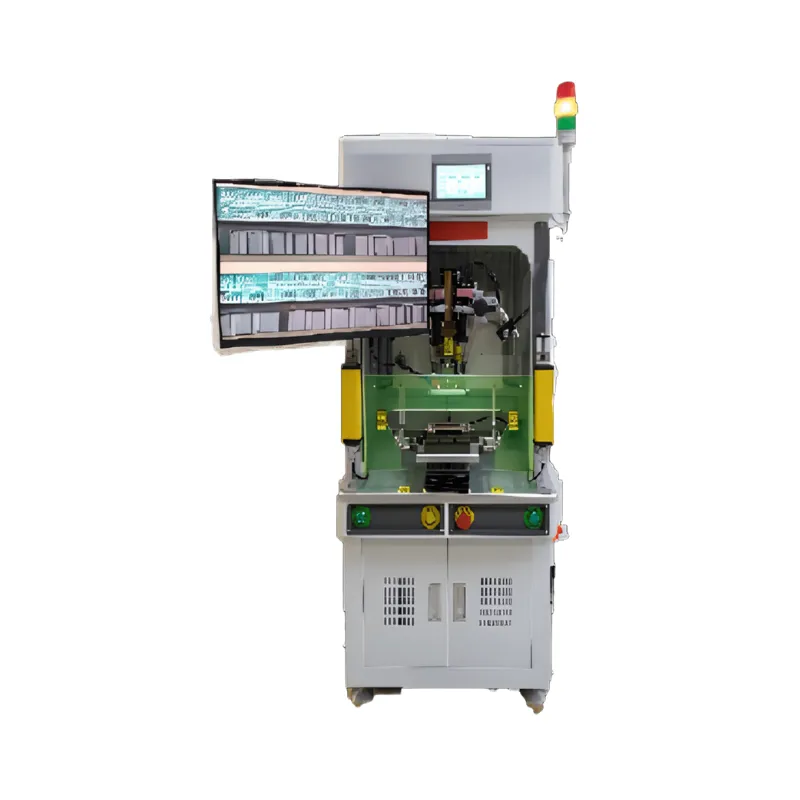
Precision micro-component assembly automation refers to the use of fully automated equipment systems to handle the assembly of miniature electronic components—such as Type-C connector internal modules (IM), electromagnetic interference shields (EMI), main plates (MP), and other micro-parts—with high accuracy and repeatability. These systems integrate multiple processes into a single continuous line, including cutting and transfer, component positioning, assembly, welding, inspection, and packaging.
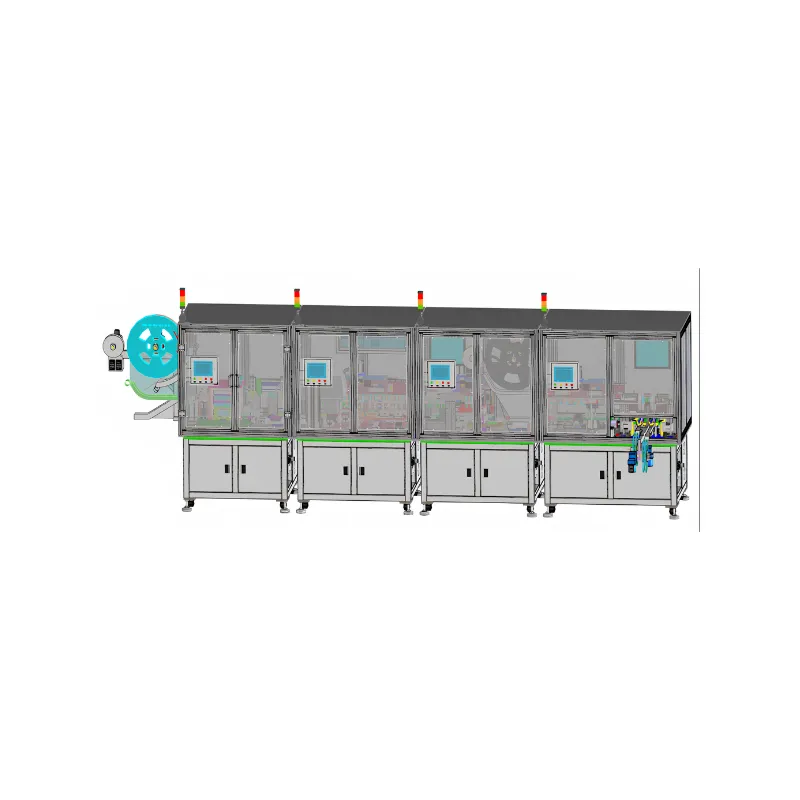
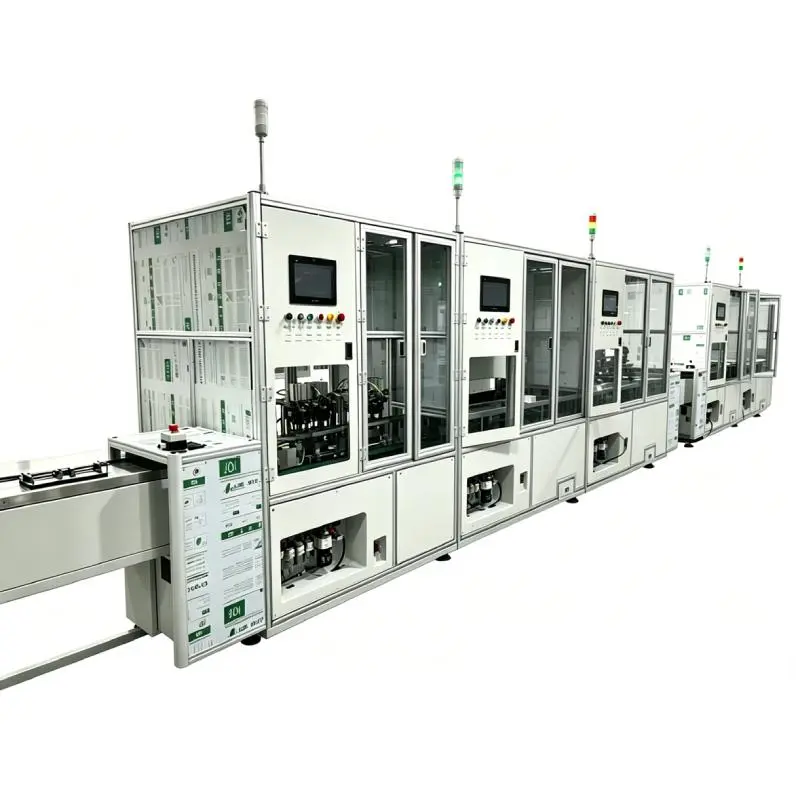
Unlike semi-automated or manual processes, fully automatic precision assembly lines are designed to perform these operations without human intervention at each station. Equipment such as Mijoint's fully automatic Type-C connector assembly lines integrates multiple stations—cutting, transfer, alignment, welding, inspection—into a unified system that maintains consistent quality across high-volume production runs.
Common Pain Points in Micro-Component Assembly: Low Yield, High Scrap Cost, and Labor Dependency
Manufacturers of precision electronic components frequently encounter three persistent challenges that directly impact profitability and production scalability.
Low Yield Rates
When micro-components are assembled manually or with semi-automated equipment, positioning inaccuracies and inconsistent process control lead to defective products. A misaligned IM or EMI component in a Type-C connector can cause electrical failures, resulting in yield drops that directly impact profitability. Each defective unit represents not just lost material but also wasted processing time across multiple upstream stations—from cutting and transfer to partial assembly.
In high-volume production environments, even a small percentage decrease in yield can translate to significant losses over time. Manufacturers producing Type-C connectors at scale need consistent, repeatable assembly processes to maintain yield rates that keep production economically viable.
High Scrap Cost
Precision components—such as Type-C connector IMs, EMIs, midplates, and MP components—are manufactured from materials that carry significant cost. When assembly defects occur late in the process, the accumulated value of the scrapped unit includes all prior processing steps: cutting, transfer, alignment, and partial assembly. A connector that fails inspection after welding has already consumed the value of every upstream operation.
In high-volume production, even a marginal increase in scrap rate can result in substantial material waste and financial loss over a production run. Controlling scrap cost requires not only improving assembly accuracy but also detecting defects as early as possible in the process—before additional value is added to a unit that will ultimately be rejected.
Labor Dependency
Manual assembly of micro-components requires highly skilled operators, and even then, consistency is difficult to maintain across shifts. Training costs are high, workforce turnover disrupts production stability, and human fatigue inevitably leads to quality drift during extended production runs. For manufacturers scaling up production to meet growing demand, reliance on skilled labor becomes a bottleneck that limits capacity expansion.
Additionally, manual processes are inherently slower than automated ones, creating throughput limitations that prevent manufacturers from meeting aggressive delivery schedules. The inability to scale production quickly in response to demand surges can result in lost business opportunities and eroded competitive position.
Core Technologies: Vision Positioning, Precision Feeding, and Multi-Station Integration
Precision micro-component assembly automation relies on several core technologies working in concert to achieve the accuracy, speed, and consistency required for micro-component production.
Vision Positioning and Inspection Systems
Automated vision systems use CCD (charge-coupled device) cameras to capture workpiece features and determine precise positional data. In connector assembly lines, vision inspection stations photograph and inspect terminal alignment, verifying that components are correctly positioned before and after assembly. This real-time visual feedback enables the system to detect and correct positioning deviations automatically, ensuring each component is placed with high accuracy.
Vision inspection is also used for glue inspection—verifying that adhesive has been correctly applied—on assembly lines that include glue-related processes. By integrating vision inspection directly into the assembly line, manufacturers can catch defects at the point of origin rather than discovering them at end-of-line testing.
Precision Feeding: Integrated Cutting and Transfer
Integrated cutting and transfer units are designed to handle delicate micro-components with precision. These systems cut components from carrier strips or trays and transfer them to assembly stations without damage. The integrated cutting and transfer mechanism ensures that components arrive at the assembly station in the correct orientation and position, which is critical for maintaining assembly accuracy at high speed.
This integrated approach eliminates the need for separate cutting and handling operations, reducing the number of transfer steps where damage or misalignment can occur. The result is superior efficiency and accuracy of cutting and assembly, which directly contributes to improved equipment stability and higher throughput.
Multi-Station Integration
Fully automatic assembly lines integrate multiple processing stations into a single continuous workflow. For example, a Type-C connector assembly line may include stations for IM and EMI cutting, transfer, positioning, assembly, spot welding, and inspection—all operating in sequence as a unified system.
The multi-rotor maglev transport system moves carriers between stations at high speed, enabling continuous flow through all process steps. Meanwhile, a dual-tray feeding mechanism enables zero-downtime reloading, keeping the line running without interruption for material replenishment. This combination of high-speed transport and continuous feeding significantly shortens reloading time and increases overall throughput.
Multi-Point Synchronous Spot Welding
For applications requiring welded connections—such as EMI shield attachment, ring and nut welding, and connector spot welding—multi-point synchronous spot welding technology enables multiple weld points to be completed simultaneously. This improves throughput and ensures consistent welding quality across all points in a single operation. The multi-rotor maglev system combined with multi-point synchronous spot welding significantly improves productivity and throughput for applications such as miniature metal ring and precision nut assembly.
Applications in Type-C, BTB, and FPC Connector Assembly
Precision micro-component assembly automation is applied across a range of connector and component types commonly found in consumer electronics and precision electronics manufacturing.
Type-C Connector Assembly
Type-C connectors consist of multiple internal components—including IM (internal module), EMI shields, MP (main plate), and midplates—that must be assembled with high precision. Fully automatic assembly lines handle several configurations:
3-in-1 Assembly and Spot Welding: Integrating MP, IM, and EMI components into a single Type-C connector in one continuous operation, with spot welding for secure attachment. The integrated cutting and transfer unit ensures superior efficiency and accuracy of cutting and assembly, significantly boosting equipment stability.
5-Part Assembly and Inspection: Conducting welding, assembly, inspection, and packaging of upper IM, lower IM, upper EMI, and lower EMI with the midplate as the main body. This high-precision automation system integrates a 5-in-1 pre-overmolding preparation process, handling multiple components in a single integrated line.
2-in-1 Assembly: High-speed assembly of IM and EMI components using an integrated cutting and transfer unit combined with multi-rotor maglev technology. The multi-rotor maglev technology enhances carrier movement speed and assembly efficiency, significantly improving equipment production stability.
Assembly and Spot Welding with Glue Inspection: Integrating glue inspection, OM (outer mold) and housing assembly, upper and lower shell assembly, and spot welding into a single automated line. The multi-rotor maglev system provides high productivity, while the dual-tray feeding mechanism enables zero-downtime reloading.
Miniature Metal Component Assembly: Rings and Nuts
Miniature metal rings and precision nuts used in electronic assemblies require high-precision alignment and secure welding. Fully automatic assembly lines featuring a high-speed maglev transport system and automatic spot welding technology handle the automated assembly and spot welding of these components. The multi-rotor maglev system and multi-point synchronous spot welding technology significantly improve productivity and throughput for these applications.
How Automation Solves These Pain Points
Addressing Low Yield
Automated vision systems provide real-time positional feedback, ensuring each component is placed accurately before assembly proceeds. Vision inspection stations verify component positioning and terminal alignment, automatically sorting out non-conforming products before they advance to downstream stations. By detecting defects early and maintaining consistent process control, automated lines improve yield rates compared to manual or semi-automated processes.
The integrated cutting and transfer unit also contributes to yield improvement by ensuring that components are handled precisely from the start, reducing the likelihood of positioning errors that would propagate through subsequent assembly steps.
Reducing Scrap Cost
Integrated cutting and transfer mechanisms handle components precisely, reducing the risk of damage during handling. Multi-point synchronous spot welding provides consistent weld quality, reducing the occurrence of defective welds that would render a unit scrap. Automated inspection at multiple stages catches defects before additional value is added, minimizing the cost of each rejected unit. By integrating inspection directly into the assembly workflow rather than relying on end-of-line testing, manufacturers can identify and remove defective units early—before they accumulate further processing value.
Eliminating Labor Dependency
Fully automatic assembly lines operate continuously with minimal operator intervention. The dual-tray feeding mechanism enables zero-downtime reloading, and the multi-rotor maglev system maintains high-speed carrier movement without manual handling. This reduces the reliance on skilled operators for repetitive precision tasks, allowing manufacturers to reallocate labor to higher-value activities and scale production without being constrained by workforce availability.
By automating the assembly process, manufacturers also achieve greater consistency across shifts and production runs. Automated equipment does not experience fatigue, and its performance parameters remain stable over extended operating periods—a critical advantage for high-volume production environments where quality drift can result in significant losses.
How to Evaluate Precision Assembly Equipment
When evaluating precision micro-component assembly equipment, consider the following factors to ensure the solution meets your production requirements:
Integration Level
Look for equipment that integrates multiple processes—cutting, transfer, assembly, welding, inspection, and packaging—into a single continuous line. Higher integration reduces handling steps, improves consistency, and increases throughput. For example, a 3-in-1 assembly line that handles MP, IM, and EMI components in one continuous operation provides greater efficiency than separate stations for each component.
Vision Inspection Capability
Ensure the equipment includes vision inspection stations that can verify component positioning, terminal alignment, and assembly quality. The ability to automatically sort out non-conforming products is essential for maintaining yield. Glue inspection capability is also important for lines that include adhesive-related processes.
Transport Technology
Multi-rotor maglev transport systems provide high-speed, stable carrier movement between stations. This technology improves equipment stability and production throughput compared to conventional transport mechanisms. Evaluate the transport system's speed, stability, and ability to maintain consistent carrier movement during extended production runs.
Feeding Mechanism
A dual-tray feeding mechanism enables zero-downtime reloading, which is critical for maintaining continuous production during high-volume runs. Evaluate whether the feeding system can sustain uninterrupted operation during material replenishment, as this directly impacts overall equipment effectiveness and throughput.
Welding Technology
For applications requiring welded connections, multi-point synchronous spot welding technology provides consistent, high-quality welds across multiple points simultaneously. This improves both throughput and weld quality consistency. Evaluate the welding system's ability to deliver uniform results across all weld points in a single operation.
Why Choose Mijoint's Precision Assembly Equipment
Mijoint offers a range of fully automatic precision assembly solutions specifically engineered for micro-component assembly in the precision electronics industry. Each solution is designed to address the core pain points of low yield, high scrap cost, and labor dependency through integrated multi-station workflows, vision inspection, and high-speed maglev transport technology.
Mijoint's precision assembly equipment lineup includes:
- Fully Automatic Type-C Connector Assembly Line & Connector Spot Welding Line (Multi-Station): Integrating precision cutting and transfer, aligning, and welding into a single line for superior efficiency and equipment stability.
- Fully Automatic Type-C Connector Assembly & Inspection Line (5-Part Assembly): A high-precision automation system integrating a 5-in-1 pre-overmolding preparation process, conducting welding, assembly, inspection, and packaging of upper IM, lower IM, upper EMI, and lower EMI with the midplate as the main body.
- Fully Automatic Type-C Connector Assembly & Spot Welding Line: Featuring glue inspection, OM and housing assembly, upper and lower shell assembly, and spot welding, with a multi-rotor maglev system for high productivity and dual-tray feeding for zero-downtime reloading.
- Fully Automatic Ring and Nut Assembly Line (Spot Welding Integrated): Featuring a high-speed maglev transport system and automatic spot welding technology for the automated assembly and spot welding of miniature metal rings and precision nuts.
- Fully Automatic 2-in-1 Type-C Connector Assembly Line: Featuring an integrated cutting and transfer unit and high-speed maglev transport system for the automated high-speed assembly of IM and EMI components for Type-C connectors.
- Fully Automatic 3-in-1 Type-C Connector Assembly Line & Spot Welding Line: Integrating precision cutting and transfer with assembly and spot welding of MP, IM, and EMI components for Type-C connectors.
Explore the full range of Mijoint's precision assembly equipment. If your production involves connector types or specifications beyond the standard configurations above, Mijoint also delivers customized assembly lines built around your product drawings and process requirements — contact our team to request a tailored solution.
Conclusion
Precision micro-component assembly automation represents a critical capability for electronics manufacturers producing Type-C connectors, BTB connectors, and other micro-component assemblies at scale. By integrating vision positioning, precision feeding, multi-station assembly, and automated inspection into continuous production lines, manufacturers can improve yield rates, reduce scrap costs, and reduce their dependency on skilled labor.
When evaluating equipment, focus on integration level, vision inspection capability, transport technology, feeding mechanisms, and welding technology. Mijoint's range of fully automatic precision assembly equipment addresses these requirements with solutions specifically engineered for micro-component assembly applications in precision electronics manufacturing.
If you are planning a micro-component assembly line and need a solution configured to your specific products, throughput targets, and quality requirements, contact Mijoint's engineering team to request a customized equipment proposal. To learn more about the company's precision assembly capabilities and industry experience, visit the About Mijoint page.