
.jpg?imageMogr2/crop/584x584/gravity/center/format/webp)
.jpg)
.jpg)
.jpg)


Semi-Automatic Desktop Aluminum Foil & Dielectric Remove Machine
This aluminum foil remove machine features a mechanical structure design that perfectly simulates manual foil swinging and plucking motions. It automatically removes the surface aluminum foil or dielectric layer after the swinging process, precisely replacing manual auxiliary operations to achieve full handling automation.
Product Specifications
Item |
Parameter |
|
Rated Voltage
|
AC 220 V 50 Hz
|
|
Equipment Power
|
< 1.5 kW
|
|
Air Supply Pressure
|
0.5-0.7 MPa
|
|
CT
|
≤ 6 s
|
|
Applicable Product Width
|
< 90 mm
|
|
Remove Distance
|
< 10 mm
|
|
Dimensions
|
L 550 x W 450 x H 500 mm
|
Core Strengths
Intelligent Swinging Function
This dielectric remove equipment supports on-demand activation/deactivation of the swinging mode. This function significantly enhances stripping stability and control precision, dramatically improving the consistency of final processing results.
Human-Machine Collaboration for Optimization
Designed to work in tandem with manual operations, this reliable foil stripping machine successfully resolves the wire consistency issues caused by pure manual handling, ensuring the removed wire geometry strictly meets downstream engineering specifications.
Request Quote Online
Fill in the information below, we will provide you with a professional quotation within 24 hours
Contact Information
Service Commitment
- 24-hour quote response
- Free technical solution design
- On-site demonstration and training
- One-year warranty, lifetime maintenance
Related Product Recommendations
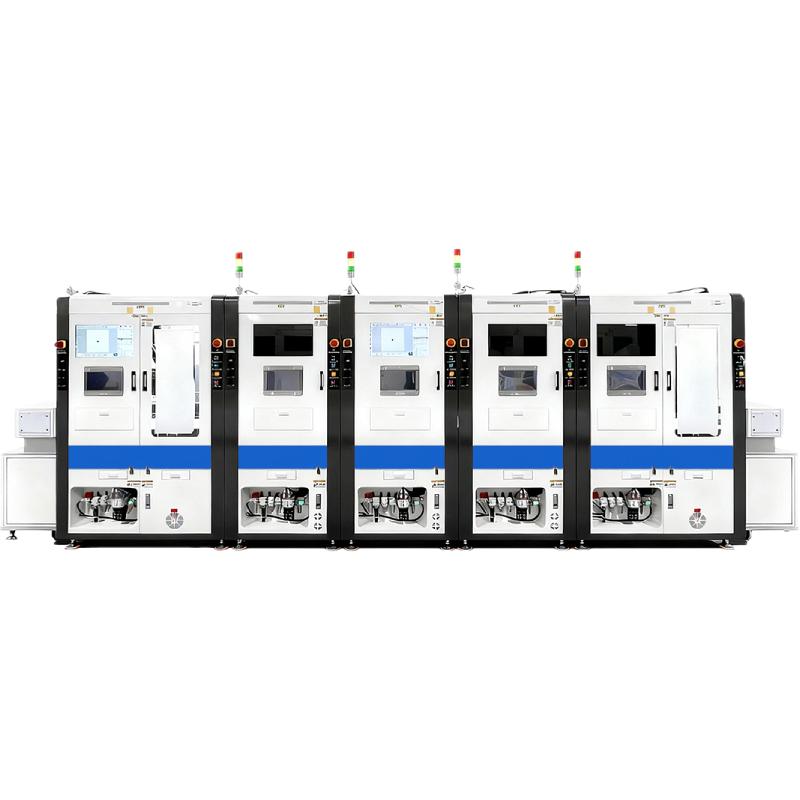
1.2 m/0.8 m Standardized Platform
Definition of Standardized Platform
This highly adaptable cable automation platform establishes a new benchmark for manufacturing through five pillars of standardization:
1. Equipment Dimensions Standardization (L×W×H): 1.2 m*1.2 m*1.9 m/0.8 m*1.2 m*1.9 m.
2. Electrical Control System Platformization: With unified PLC/IPC platform, standard I/O interfaces and communication protocols, modules are plug-and-play, and program recipes can be recalled with a single click, significantly reducing debugging time.
3. Mechanical Interface Platformization: All functional modules (pay-off, lacing, soldering, etc.) adopt unified mechanical interfaces and quick-change mechanisms for rapid mounting, dismounting, and function switching.
4. Process Platformization: Covers the complete process chain including aluminum foil stripping, insulation remove, soldering, and glue dispensing. Modules can be flexibly combined to match diverse product process requirements.
5. Safety Protection Standardization: Adopts unified physical guarding standards along with certified, compliant safety electrical components.
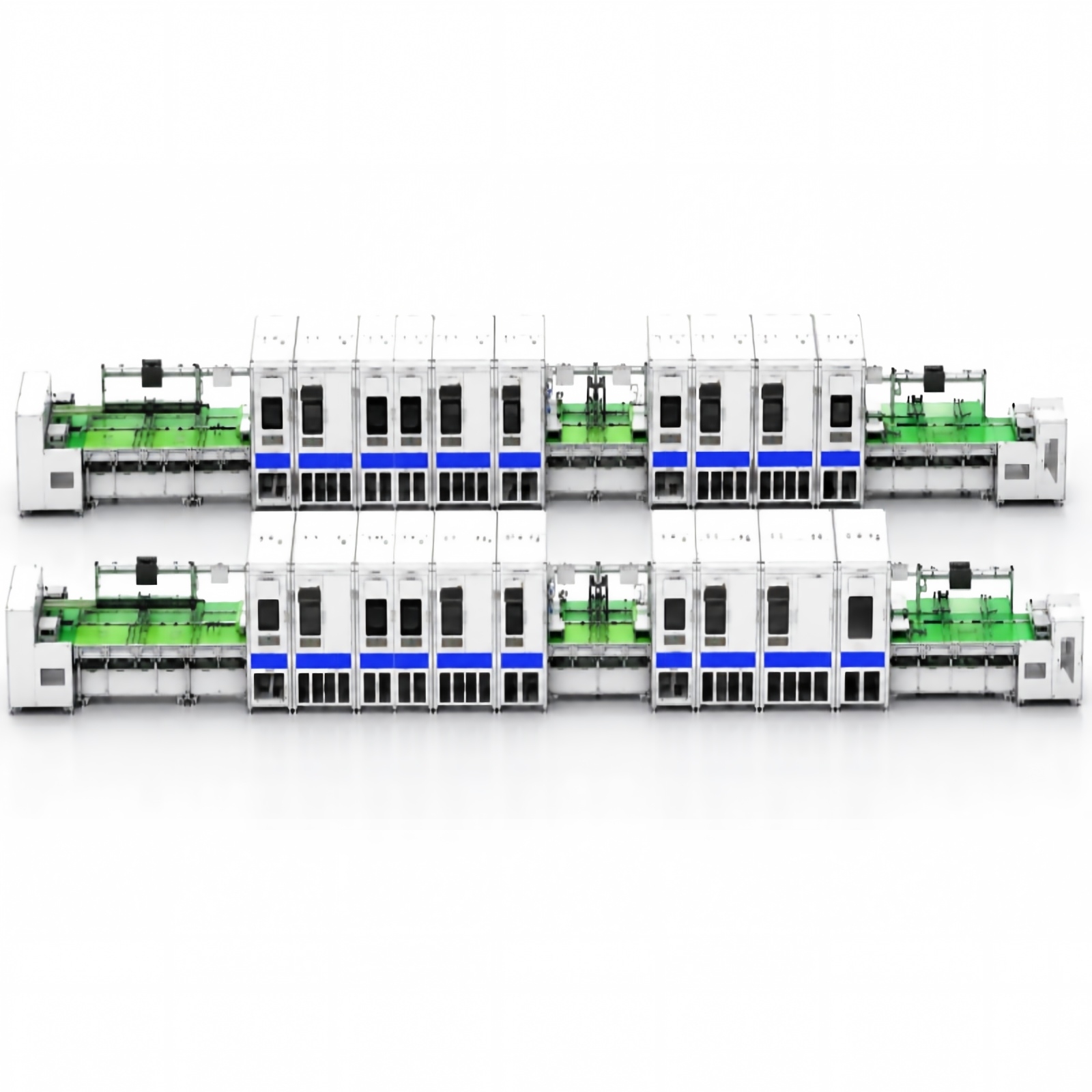
Fully Automatic CDFP High-Speed Cable Assembly Line
This state-of-the-art production line seamlessly integrates multiple stations, including automatic wire feeding & cross-wiring, UV laser aluminum foil stripping & swinging, aluminum foil remove, CO2 laser insulation stripping, insulation remove, pre-forming & final-trimming, Hot Bar soldering, an automatic clamp & fixture reflow system, and full MES integration.
Engineered for next-generation CDFP cable automation, this line utilizes high-precision servo systems and vision guidance to guarantee absolute assembly stability, significantly eliminating redundant operator movements while achieving true data-driven production.
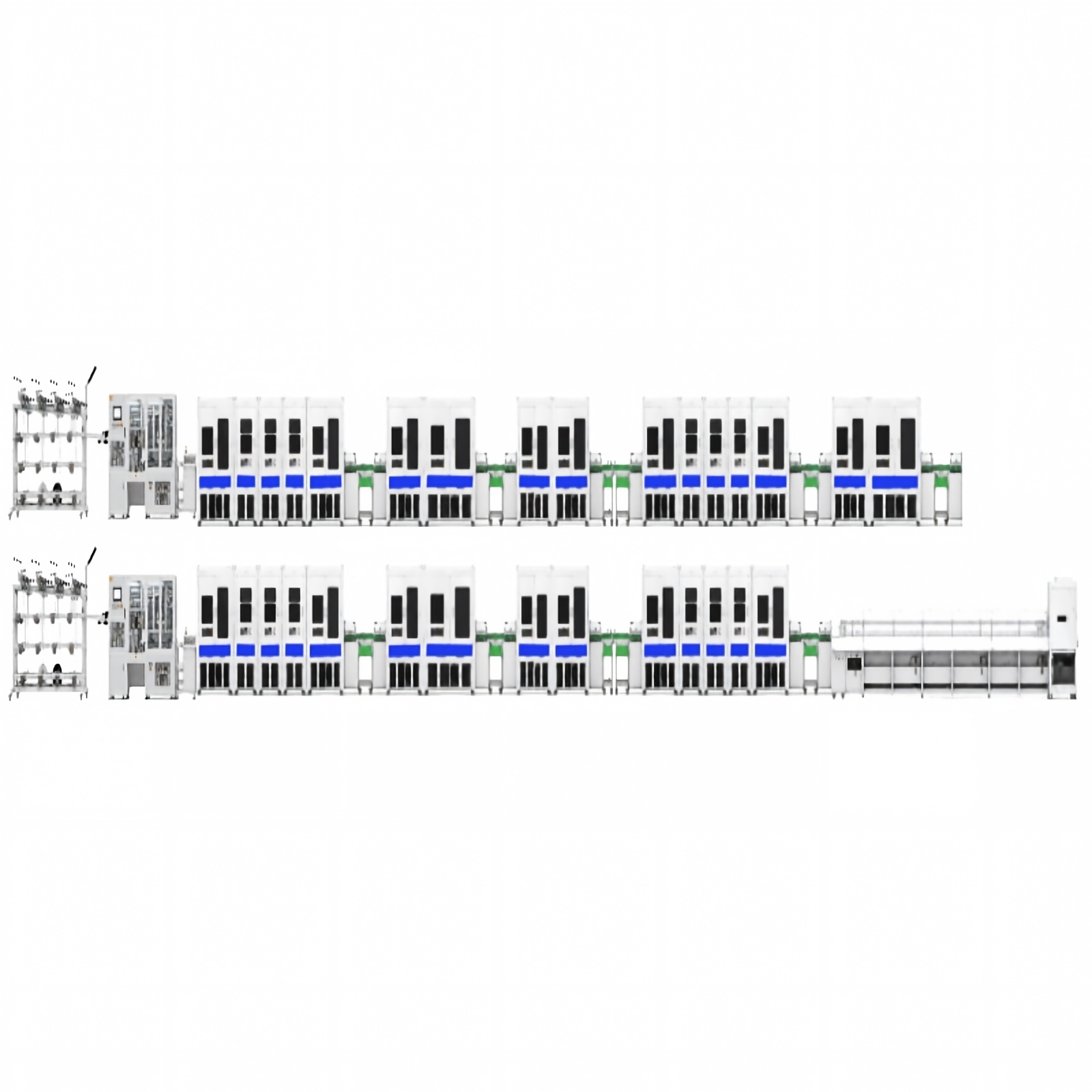
Fully Automatic Izumi High-Speed Cable Assembly & Soldering Line
This modular, flexible automated line seamlessly integrates all processes – wire pay-off, lacing, aluminum foil stripping & remove, insulation stripping & remove, wire forming & trimming, soldering, and UV glue dispensing & curing. It is specifically engineered as a state-of-the-art automatic wire harness assembly line for the end-to-end processing of shielded/aluminum foil wire harnesses, coaxial cables, electronic lead wires, and ribbon cable assemblies.
Through a standardized platform and modular architecture, the line enables rapid changeovers, flexible manufacturing, and high equipment reuse rates—significantly boosting productivity, reducing labor dependency, and effectively conquering high-mix, low-volume market challenges.
